
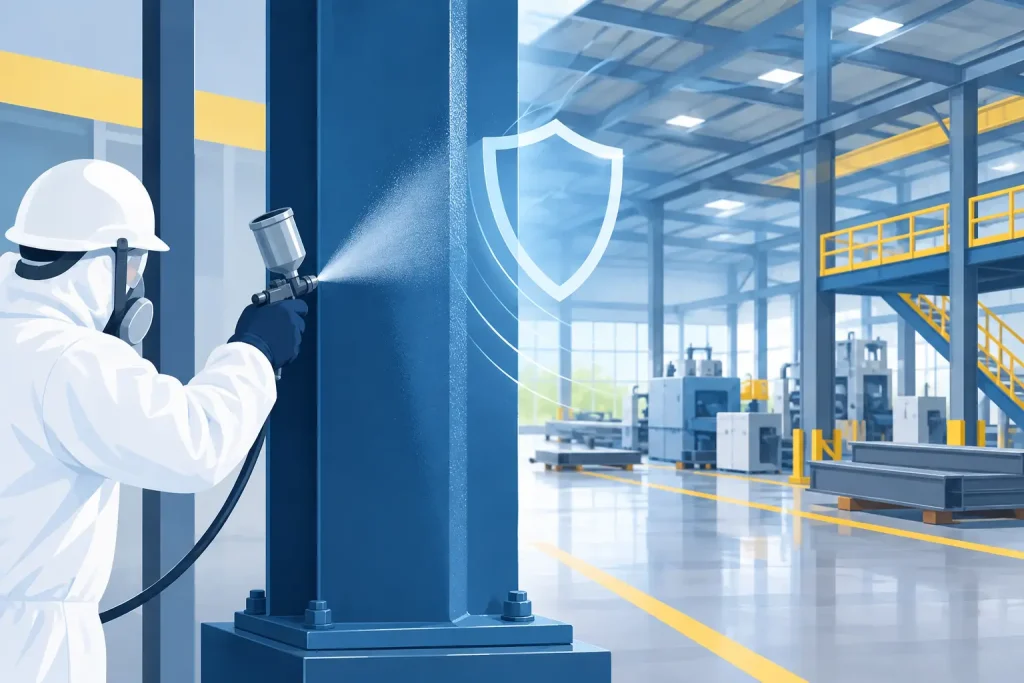
A coating failure on a factory floor, roof or steel structure is rarely just a cosmetic issue. It can lead to corrosion, concrete damage, slip hazards, contamination concerns and unplanned downtime. Protective coatings for factories are designed to prevent those problems by matching the coating system to the surface, working conditions and exposure risks of the site.
For Melbourne facilities managers, owners and operations teams, the right specification protects the asset while keeping maintenance predictable. The wrong one can peel, blister or wear through far earlier than expected.
Why Protective Coatings for Factories Matter
Factories place surfaces under pressure that ordinary paint is not built to handle. Forklifts abrade concrete floors. Machinery creates vibration and heat. Cleaning regimes expose walls and floors to water, detergents or solvents. External steelwork faces rain, UV exposure and changing temperatures, while internal areas may be affected by steam, oils, dust or chemical splashes.
A properly selected industrial coating creates a protective barrier between the substrate and those conditions. On steel, that barrier helps slow oxidation and corrosion. On concrete, it can reduce dusting, staining and liquid penetration. In high-traffic areas, it improves cleanability and helps the surface stand up to daily operational wear.
The commercial value is straightforward. A planned coating project is generally far less disruptive and more cost-effective than repairing corroded steel, failed concrete or widespread water damage after the fact. Good preparation and a suitable system also extend repainting cycles, which matters when access equipment, shutdowns and safety controls are part of the job.
Start With the Conditions, Not the Colour
The most durable industrial paint job starts with an accurate assessment. Choosing a product based on its appearance or advertised lifespan alone can cause problems. A coating that performs well in an office warehouse may fail quickly in a wash-down area, loading bay or chemical-processing zone.
Before work begins, consider what the surface is exposed to. This includes moisture, direct sunlight, salt-laden air, heat, chemical contact, impact, vehicle traffic and frequent cleaning. The substrate matters too. Bare steel, galvanised steel, aged concrete, masonry and previously painted surfaces each require different preparation and primer choices.
The condition of the existing surface is equally important. Rust, loose paint, oil residue, chalking, cracks and dampness all affect adhesion. Coating over these issues may make the area look better for a short time, but it does not solve the underlying failure.
Steelwork and structural assets
Steel beams, handrails, gates, tanks, platforms and external plant structures need protection against corrosion. The usual approach involves removing unstable coatings and rust, preparing the surface to the required standard, applying a compatible primer and building the finish with durable intermediate and top coats.
The right system depends on the environment. Internal structural steel in a dry factory may need a different specification from external steel exposed to Melbourne rain, UV and industrial pollutants. Coastal or high-humidity locations may warrant a higher-performance corrosion-control system.
Concrete floors and walls
Concrete is hard-wearing, but it is not automatically protected. Untreated concrete can absorb oils, chemicals and moisture, while forklift traffic can create dust and surface wear. Epoxy and polyurethane systems are common options for factory floors because they can provide a dense, cleanable and abrasion-resistant finish.
However, concrete needs to be sound and dry enough for the system selected. Moisture vapour beneath a coating can lead to bubbling or delamination. Surface grinding, crack repairs, joint treatment and moisture testing may be required before coating begins. Skipping this stage to save time often costs more once the floor has to be rectified.
Common Coating Systems and Their Best Uses
There is no single best product for every factory. A professional recommendation should reflect the area, the operating environment and the level of downtime the business can accommodate.
Epoxy coatings are widely used on concrete floors and some steel surfaces. They offer strong adhesion, chemical resistance and a hard finish suitable for many industrial settings. Their limitation is UV stability: some epoxy products can yellow or chalk when exposed to direct sunlight, making them less suitable as an external final coat.
Polyurethane coatings are often used where UV resistance, colour retention and a more flexible finish are needed. They can be a practical topcoat over epoxy systems, particularly for external structures and areas with changing temperatures. They are also used in some floor systems where abrasion resistance and appearance matter.
Zinc-rich primers are commonly specified for steel in more demanding corrosion environments. They provide an additional level of cathodic protection when correctly applied over well-prepared steel. They are not a shortcut around surface preparation, however. Their performance still depends heavily on the cleanliness and profile of the steel beneath.
Specialised chemical-resistant linings may be needed near batteries, processing equipment, chemical storage or wash-down operations. In these locations, the chemical type, concentration, temperature and frequency of exposure should be confirmed before a system is chosen. A coating that withstands occasional oil contact may not be suitable for regular acid or solvent exposure.
Preparation Is Where Coating Performance Is Won
Even premium coatings cannot compensate for poor preparation. Most early coating failures come back to contamination, inadequate surface profiling, trapped moisture or incompatible layers beneath the new finish.
Steel preparation may involve washing, mechanical abrasion, power-tool cleaning or abrasive blasting, depending on the specification and existing condition. Concrete floors may need diamond grinding or shot blasting to remove weak surface material and create the profile required for adhesion. Walls often require cleaning, repairs, sanding and sealing before coating.
Timing also matters. Coatings have stated recoat windows, curing times and application requirements for temperature and humidity. Applying a product outside these conditions can compromise the finish. On an active factory site, the works need to be programmed around operations so that cleaning, preparation, coating and curing can happen without contamination or unnecessary interruption.
This is why a low upfront quote can be misleading. If it allows little time for preparation, masking, repairs and cure time, the apparent saving may be short-lived. The better question is whether the proposed scope addresses the actual condition of the asset and the demands placed on it.
Planning the Works Around Factory Operations
A factory cannot always stop production for painting. The practical solution is careful staging. Areas can often be separated into zones, with work completed during shutdowns, weekends, quieter shifts or planned maintenance periods. Clear access plans, exclusion zones and communication with site personnel help keep the job safe and organised.
For floor coatings, the key constraint is usually curing time. Pedestrian access may be possible before forklift or pallet-jack traffic, and full chemical resistance can take longer again. A contractor should explain these limitations before work starts, rather than leaving the site team to discover them on the day.
Safety controls are also essential. Industrial coating work can involve dust, fumes, elevated access equipment and restricted work areas. Qualified tradesmen, appropriate site inductions, White Cards, insurance and proper containment measures all contribute to a safer project. This is particularly important in facilities with staff, stock, sensitive equipment or food-related operations nearby.
How to Get a Coating Specification That Holds Up
When comparing proposals for factory coating work, look beyond the total price. A useful scope should identify the surfaces to be treated, preparation methods, repair work, primer and topcoat system, number of coats, expected film build and access requirements. It should also clarify what operational support is needed from the site, including access, cleaning, isolation of equipment and downtime.
Ask how the contractor will deal with rust, cracks, moisture or failed existing coatings if they are found after work begins. These conditions are not always fully visible during an initial inspection, but they should be anticipated and managed clearly.
At The Scotsman Painters, industrial projects are approached with the same focus on preparation, safe site practices and dependable delivery that commercial clients expect. The aim is not simply to apply a fresh coat, but to provide a finish suited to the asset and the way the facility operates.
A coating system should earn its place over time. When it is properly specified, carefully prepared and applied without cutting corners, it protects more than the appearance of a factory – it helps keep the site safer, cleaner and easier to maintain for years to come.