
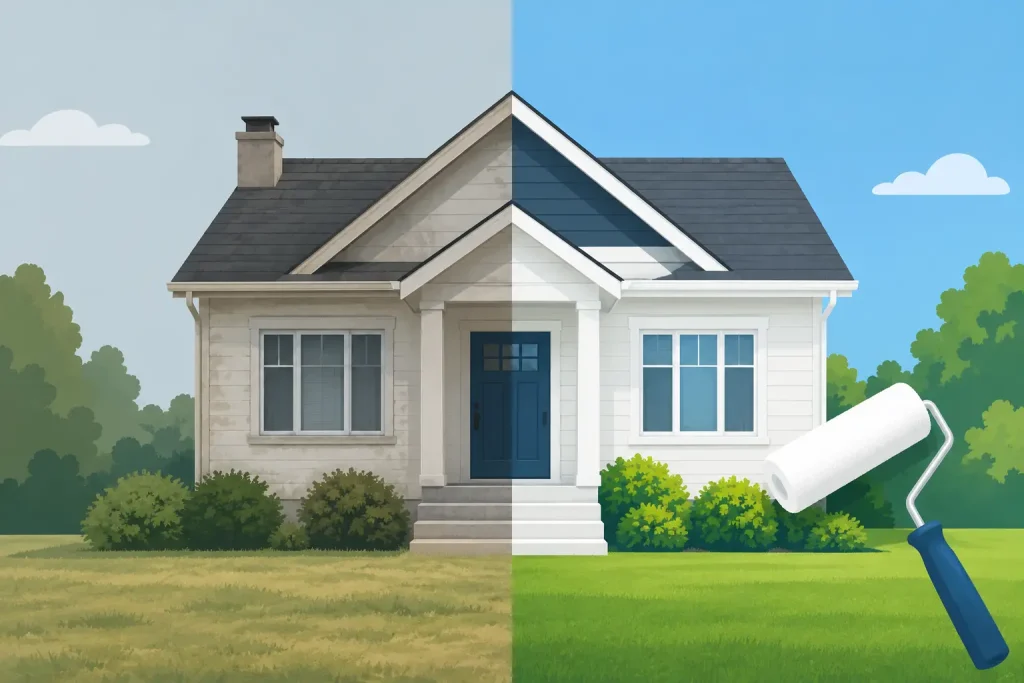
A before-and-after house painting project can make a home look newer, sharper and far better cared for. But the real difference is rarely just the colour on the walls. It comes from the preparation underneath: repairing damaged surfaces, treating weathered timber, sealing stains and applying the right coating system for Melbourne conditions.
For homeowners, the result can lift street appeal and protect a major asset. For body corporates, schools and commercial property managers, a well-managed repaint can improve presentation without creating unnecessary disruption for residents, staff or visitors. The finish people notice is the final coat. The work that determines whether it lasts starts much earlier.
What Before and After House Painting Really Shows
The most striking painting transformations usually begin with surfaces that have been left exposed to years of sun, rain, moisture and daily wear. Exterior paint can chalk, crack or peel. Timber fascias may show signs of rot. Render can develop hairline cracks, while steel railings and gutters can rust at joins and edges.
Inside, the problems are often more subtle. Scuffed hallways, faded living areas, stained ceilings and tired trims can make an otherwise sound property feel dated. A change in wall colour helps, but a quality result also depends on clean lines, smooth repairs and an even sheen across every surface.
A proper assessment separates cosmetic wear from a maintenance issue. Painting over flaking coatings or moisture damage might improve the appearance briefly, but it will not solve the cause. This is why experienced painters inspect the condition of the substrate before recommending colours, products or a scope of work.
Preparation Is Where the Long-Term Value Sits
There is no shortcut around surface preparation. If a painter applies premium paint over loose material, powdery surfaces or unfilled cracks, the coating cannot perform as intended. The job may look acceptable on completion, then fail early once the weather changes or the surface is knocked about.
For an exterior repaint, preparation may include pressure cleaning, scraping loose paint, sanding rough timber, filling gaps, treating rust, replacing deteriorated sections and priming bare areas. The right primer matters. It provides a stable base for the topcoat and helps prevent tannin bleed, staining or poor adhesion on difficult surfaces.
Interior preparation can involve patching dents and plaster cracks, setting nail holes, sanding repairs flush and sealing stains before painting. Water marks on a ceiling, for example, need more than a coat of ceiling white. The original leak must be repaired first, then the stain needs an appropriate sealer so it does not reappear through the new finish.
This stage can seem slow when a property owner is eager to see colour going on. In practice, it is the most efficient way to avoid call-backs, premature repainting and disappointing results.
Not Every Surface Needs the Same Treatment
A weatherboard home, brick veneer property, rendered façade and heritage terrace all require different decisions. Timber expands and contracts, so it needs coatings that can move with the material while providing weather protection. Masonry may need breathable paint systems, particularly where moisture is present. Older homes can reveal previous coating failures that need careful removal or stabilisation.
The same applies to commercial and strata properties. Stairwells, foyers, car parks, steel balustrades and high-traffic corridors all have different demands. A low-sheen wall coating that works well in a family living room may not be the best choice for a school hallway or apartment common area where washability and durability matter more.
Colour Makes the Biggest Visual Change, But It Is Not the Only Choice
A fresh colour scheme can alter how a house sits on the street. Lighter exterior colours can make a compact façade feel broader and brighter, while darker trims can add definition to windows, eaves and entry points. On older homes, a sympathetic palette can preserve character without making the property look stuck in the past.
Inside, colour influences light, scale and how rooms connect. Warm whites can soften south-facing rooms, while cooler neutrals can suit spaces with strong natural light. Deep feature colours work well in the right location, but they require good preparation and careful application because darker tones tend to show roller marks, patchiness and surface flaws more readily.
The practical consideration is maintenance. Very light external colours can show dirt around gutters, downpipes and high-contact areas. Very dark exterior coatings can absorb heat, which may not suit every cladding type or substrate. A good colour decision balances the look you want with the building materials, exposure and level of upkeep you are prepared to manage.
The Finish Should Suit How the Property Is Used
Paint sheen affects both appearance and performance. Flat and low-sheen finishes are popular for internal walls because they reduce glare and give rooms a soft, modern appearance. However, higher-wear areas may benefit from a more washable finish. Satin or semi-gloss coatings are commonly used on doors, skirting boards and trims because they stand up better to knocks and cleaning.
For exteriors, the right finish depends on the substrate and design. A consistent finish across fascias, gutters, weatherboards and trims creates a tidy result, but those surfaces should not automatically receive the same product. Metal, timber and masonry each need compatible coatings.
This is where professional workmanship becomes visible in the details. Straight cut-in lines, clean trim edges, consistent coverage and no missed areas make the difference between a quick repaint and a polished transformation. At The Scotsman Painters, qualified and insured tradesmen plan the work around surface condition, access and the day-to-day needs of the property.
Planning Reduces Disruption During the Work
A house repaint does not have to take over your life, but it does require sensible planning. Exterior work is subject to weather, drying times and access requirements. Interior work may need furniture moved, fragile items protected and rooms completed in stages so the household can still function.
For commercial, strata and school sites, scheduling is even more important. Work may be planned around trading hours, holiday periods, resident access or quieter parts of the day. Clear communication about preparation, start dates, access, noise and drying time gives everyone a realistic expectation of the project.
Safety also needs to be part of the plan. Elevated sections, stairwells, roofs and difficult access points may require appropriate access equipment and trained operators. On commercial sites, painters should understand site inductions, safe work procedures and the requirements of an active workplace. Saving money by overlooking these details can create delays and risks that cost more later.
How to Judge a Painting Transformation Properly
Before-and-after photos are useful, but they do not tell the full story. A strong result should look good from the street and close up. Check whether repairs blend into surrounding surfaces, whether the paint coverage is even and whether edges around windows, cornices, fixtures and trims are neat.
Ask what preparation was completed, what products were used and how problem areas were addressed. If there was peeling paint, rust or water staining before the project, the question is not simply whether it has disappeared. It is whether the underlying issue was treated correctly.
For exterior work, look at the areas that often get rushed: eaves, window frames, fascias, downpipes, fences and the lower sections of walls near garden beds. For interiors, inspect ceilings, corners, doors and high-touch zones. These details reveal the standard of care behind the finished appearance.
A Better Finish Starts With an Honest Scope
The right painting quote should reflect the actual condition of the building, not just the number of rooms or square metres. Two houses with the same footprint can require very different amounts of preparation. One may only need cleaning and repainting, while the other needs extensive timber repairs, crack treatment or access equipment.
That is why the lowest price is not always the best value. A quote that leaves out preparation, protection, primer or access can appear attractive until variations, delays or early paint failure become part of the picture. Clear inclusions, realistic timing and qualified tradesmen give property owners more confidence from the outset.
The best before-and-after result is one that still looks well finished years after the drop sheets are packed away. Start with a careful inspection, choose coatings that suit the surface and make room in the scope for the preparation the property genuinely needs.