
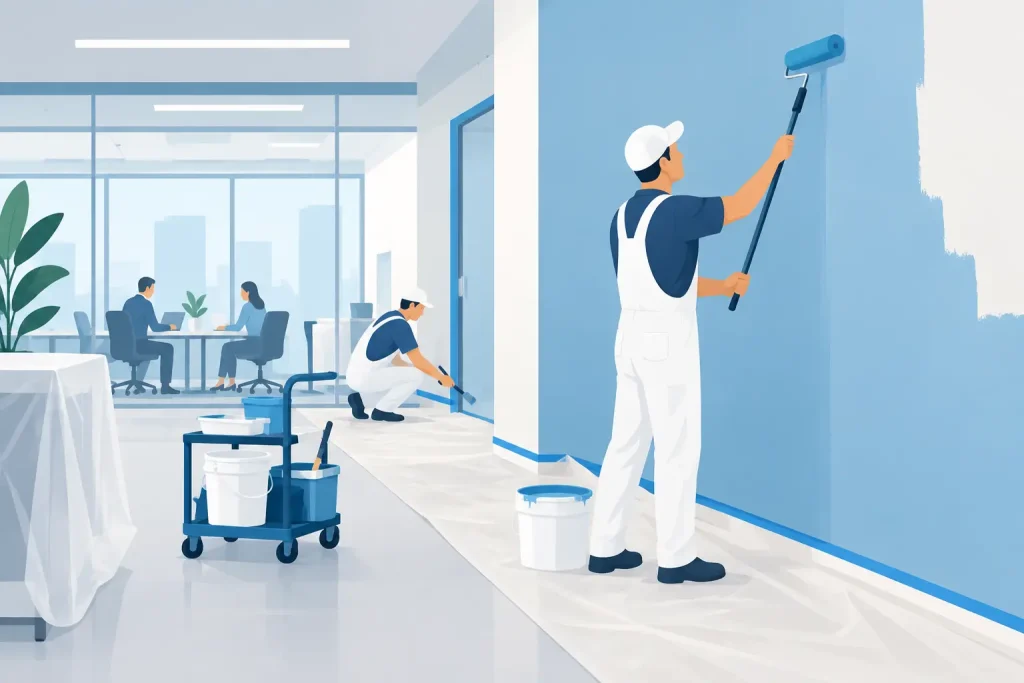
A repaint should improve a property, not bring daily life or business operations to a halt. The best low disruption painting methods combine careful staging, controlled preparation, suitable products and clear communication before a brush or roller reaches the wall. For Melbourne homes, offices, schools and strata properties, the right approach keeps access open, limits dust and odours, and protects the quality of the finished work.
Low disruption does not mean rushed work. Proper preparation, curing time and safe work practices still matter. It means organising those essentials in a way that causes the least practical inconvenience to occupants, staff, visitors and neighbours.
Start With a Staged Painting Plan
The most effective way to reduce disruption is to divide the project into manageable work zones. Rather than closing an entire office floor, apartment corridor or family home at once, painting can be completed room by room, level by level or façade section by façade section.
A staged plan should identify which areas must remain accessible, when noisy preparation can take place, where equipment can be stored and how residents, staff or contractors will move safely around the site. On a strata project, this may mean maintaining clear access to letterboxes, lifts, fire exits and car parks. In a commercial setting, it may involve completing work after hours, over weekends or in agreed quiet periods.
The benefit is twofold. Occupants retain use of most of the property while the painting team can focus on a contained area, maintain a tidy site and achieve a consistent finish before moving on. It also makes scheduling easier when weather, tenant access or operational needs change.
Protect Surfaces Before Preparation Begins
Most disruption comes from preparation rather than the final coats. Scraping loose paint, sanding damaged areas, patching holes and treating stains are essential steps, but they can create dust, noise and clutter if they are not properly controlled.
Good low-disruption practice begins with protection. Floors, furniture, glazing, joinery, pathways and nearby landscaping should be covered or masked before preparation starts. Work areas should be isolated where practical, with drop sheets and dust control measures selected for the surface and environment.
For occupied homes, this means moving and covering furniture carefully rather than expecting owners to empty every room. For offices and schools, it means protecting desks, technology and teaching materials while keeping essential routes clear. External work requires the same discipline, particularly around gardens, paved areas, vehicles and shared walkways.
Dustless or low-dust sanding equipment can significantly reduce airborne residue during suitable preparation tasks. It is not a substitute for containment or clean-up, but it helps maintain a cleaner environment and limits the amount of dust travelling into occupied spaces.
Repair Only What Needs Repair
A detailed inspection avoids unnecessary work. Not every painted surface requires full stripping, extensive sanding or the same treatment. Sound existing coatings may only need cleaning, spot repairs and a properly prepared key for repainting, while failed areas may need more substantial attention.
This assessment protects the budget as well as the programme. Targeted repairs are less intrusive than blanket preparation, provided they are based on the actual condition of the surface and not used as a shortcut where wider coating failure is present.
Choose Low-Odour, Fast-Drying Paint Systems
Paint selection affects how quickly an area can return to use. Low-VOC and low-odour water-based coatings are often a practical choice for occupied interiors because they generally dry faster and release fewer fumes than traditional solvent-based products.
That does not mean water-based paint is automatically right for every surface. High-traffic doors, metalwork, timber trim, industrial areas and heritage details may require specialised primers or coating systems to achieve the required adhesion, durability or appearance. The right method depends on the substrate, existing coating, expected wear and the level of finish required.
Where low-odour products are appropriate, they can make a meaningful difference in homes with children, workplaces with staff on site and common areas with regular foot traffic. Ventilation still needs to be managed, and drying times must be respected before furniture, signage or occupants return to the area.
Fast drying is useful, but it should never lead to premature recoating. Applying the next coat too soon can affect adhesion, sheen and long-term performance. A dependable contractor plans labour and staging around the manufacturer’s recommended drying and curing requirements.
Use the Right Application Method for the Site
Brushes, rollers and spray equipment all have a place in professional painting. The best option is the one that delivers the required result with the least impact on the particular site.
Brush and roller application is often ideal for occupied interiors, smaller work zones and areas close to furniture or pedestrian access. It provides excellent control, produces minimal overspray risk and allows painters to work around detailed trim, fittings and occupied spaces. It can be slower on large open walls and ceilings, but its control is valuable where disruption must be kept low.
Spray application can be highly efficient on vacant commercial spaces, large external façades, warehouses, new builds and broad unobstructed surfaces. It can shorten application time and produce an even coating when used by trained painters. The trade-off is that spraying requires thorough masking, careful exclusion zones and suitable weather conditions outdoors. Overspray is not a minor issue, particularly near vehicles, neighbouring properties, glazing or public areas.
For many projects, a combined method is the sensible choice. Large surfaces may be sprayed and back-rolled where appropriate, while edges, trim and occupied areas are completed by brush and roller. This approach balances production speed with control and finish quality.
Schedule Work Around How the Property Is Used
Painting schedules should follow the property’s real operating pattern, not just the contractor’s availability. A household may need bedrooms and kitchens available at specific times. A medical practice may need waiting rooms operational every weekday. A school may need noisy work completed during holidays, while an office may prefer after-hours painting to avoid interrupting staff.
Early planning allows work to be sequenced around these needs. It may be possible to complete internal common areas outside peak hours, paint individual office suites over weekends, or schedule external elevation work so access points remain available. For body corporate properties, notice periods and resident communication are equally important.
Clear notice should explain the work area, dates, expected access restrictions, drying times and any requirements for moving personal items, vehicles or outdoor furniture. People are far more cooperative when they know exactly what is happening and when normal access will resume.
Maintain Clean, Safe Work Areas Every Day
A low-disruption project should look organised throughout, not only on handover day. Tools, ladders, leads and materials must be placed so they do not create hazards for residents, staff or visitors. Work zones need visible barriers and signage where required, with fire exits, stairwells and emergency access kept clear.
Daily clean-up is especially important on occupied sites. Rubbish should be removed, drop sheets gathered, walkways swept and equipment secured at the end of each shift. On commercial and strata work, this protects the appearance of the property as well as reducing safety risks.
Qualified tradesmen with the correct site credentials, insurance and safety practices are not simply a compliance consideration. They help projects proceed with fewer avoidable delays. This matters on active workplaces, multi-residential sites and jobs involving elevated access equipment, where poor planning can quickly affect tenants, visitors and other trades.
Keep One Point of Contact Throughout the Job
Painting projects become disruptive when information is unclear. A single contact person should be available to confirm progress, address access issues and explain any unforeseen repairs discovered during preparation. This is particularly useful for facilities managers and strata committees coordinating multiple occupants or stakeholders.
Regular updates do not need to be lengthy. A short confirmation of the next work area, expected completion time and any changed access arrangements keeps everyone aligned. If weather delays external painting or a hidden substrate issue requires additional repair, early advice allows decisions to be made before the programme is affected.
For Melbourne property owners and managers, the lowest-impact result comes from planning before work starts, not trying to solve interruptions once the site is already underway. The Scotsman Painters applies this practical approach across residential, commercial and strata projects, with qualified, insured tradesmen focused on clean worksites, reliable timing and lasting finishes.
A well-managed repaint should leave behind renewed surfaces, not a trail of inconvenience. Ask for a work plan that explains how access, protection, safety, product choice and daily clean-up will be handled, then choose the method that suits how your property needs to function.