
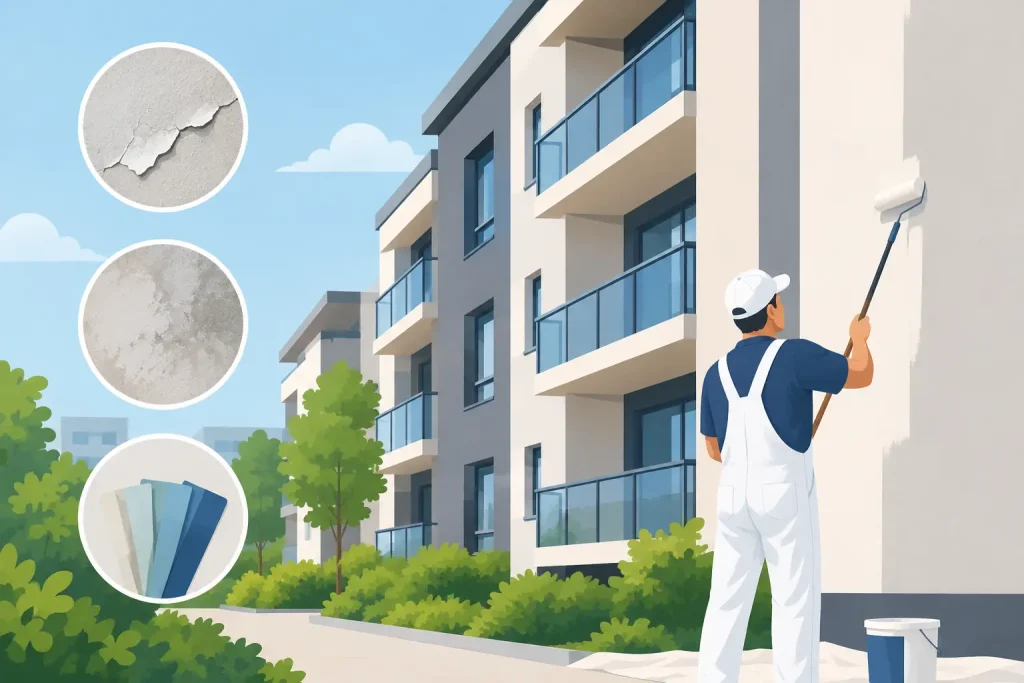
A strata repaint is rarely just about freshening up tired colour. When should strata repaint is a question best answered before peeling coatings, water damage and resident complaints turn routine maintenance into a larger remedial project. For Melbourne body corporates and strata managers, the right timing protects the building fabric, maintains presentation and gives the committee time to plan work around budgets, access and residents.
There is no single repainting cycle that suits every apartment complex. A sheltered low-rise building in good condition may need an exterior repaint every seven to 10 years. A coastal property, busy inner-city development or building with exposed elevations may need attention sooner. The condition of the substrate, the previous preparation, the coating system and ongoing maintenance all matter more than a date in the calendar.
When Should Strata Repaint Exterior Areas?
Exterior paint is a protective coating first and a finish second. Once it begins to fail, moisture can reach timber, render, metalwork or masonry. That is when a straightforward repaint can become a repair programme involving patching, replacement or treatment of damaged surfaces.
For most Melbourne strata properties, arrange a professional condition assessment when the last exterior paintwork is approaching its seventh year, or earlier if the building is exposed to harsh weather. Northern and western walls often receive the most sun, while shaded elevations may hold moisture and develop mould or mildew. Balconies, fascias, eaves, car parks, entry canopies and metal balustrades can each weather at different rates.
Signs a repaint should not wait
Paint that is fading evenly may be largely cosmetic. Paint that is cracking, flaking, bubbling or chalking is a more urgent signal. Chalking occurs when a powdery residue comes away on your hand, showing the coating is breaking down under UV exposure.
Look closely for failed caulking around windows, open joins, rust stains below metal fixtures, staining around gutters and damp patches near balconies. These are not always painting problems, but they should be investigated before painting begins. Applying new coatings over an active leak or deteriorated substrate only hides the issue for a short time.
Timber elements deserve particular attention. Peeling paint on weatherboards, window frames, soffits and fascia boards can allow moisture into the timber and accelerate decay. Early preparation and repainting is usually far more cost-effective than waiting for widespread timber replacement.
Interior Common Areas Need Their Own Schedule
Interior common areas are generally less exposed to weather, but they receive constant wear. Lobbies, corridors, stairwells, lift surrounds, bin rooms and basement entries can look tired well before exterior coatings need renewal.
A high-traffic foyer may benefit from repainting every three to five years, particularly where scuff marks, handprints, trolley damage and repeated touch-ups have left the finish inconsistent. Quiet internal stairwells may last longer. The deciding factor is whether cleaning and local repairs still produce a presentable, cohesive result.
Interior repainting is also a useful opportunity to improve practical performance. Washable low-sheen coatings suit corridors and lift lobbies, while suitable protective systems in car parks and bin areas can make cleaning easier. Colour selection matters too. Lighter colours can improve visibility in enclosed spaces, but they may show marks more readily in high-contact areas. A considered palette balances appearance with maintenance demands.
Why Repainting Too Late Costs More
Deferring painting can appear to protect the maintenance fund in the short term. However, the cost of a repaint rises quickly once surface failure spreads. Painters may need to remove loose coatings, repair cracks, treat corrosion, replace damaged timber, patch render and stabilise affected areas before the new system can be applied.
There is also a presentation cost. Poorly maintained façades, lobbies and shared spaces can affect resident satisfaction and create a negative first impression for prospective buyers or tenants. For owners corporations, planned maintenance provides more control than an urgent response to visible deterioration.
The trade-off is that repainting early without a genuine condition need is not always prudent either. Quality coatings should be allowed to deliver their expected service life. A professional inspection helps committees distinguish normal ageing from a developing failure that needs action.
Plan the Project Before the Paint Fails
The best strata painting projects are planned well ahead of the work date. This allows the committee to obtain a clear scope, set aside funds and organise resident communication without unnecessary pressure.
Start with a building inspection that records the affected areas, surface types, visible defects and access requirements. The scope should identify what is included beyond painting, such as pressure cleaning, crack repairs, timber preparation, rust treatment, sealing and replacement of failed flexible sealants. A quote that simply says ‘paint exterior’ leaves too much open to interpretation.
It is also worth confirming whether different parts of the property need different coating systems. Render, masonry, timber, steel, galvanised surfaces and previously painted substrates require appropriate preparation and primers. The cheapest quote is not necessarily the best value if it overlooks critical preparation work or uses unsuitable products.
For larger buildings, access has a direct effect on programme and cost. Elevated work platforms, boom lifts, scaffolding and rope access each suit different building designs. Access planning must account for resident safety, parking, pedestrian routes, gardens, neighbouring properties and any required permits. A qualified, insured painting contractor with the right commercial site capability can manage these details without treating them as an afterthought.
Choose the right time of year
Melbourne weather can be changeable, so exterior work needs sensible scheduling. Paint requires suitable temperature, surface moisture and drying conditions. Wet weather, cold mornings and high humidity can delay sections of a project, particularly on shaded elevations.
A contractor should build realistic weather allowances into the programme rather than promise an impractical finish date. Internal common-area painting can be completed across much of the year, but residents still need notice about temporary access restrictions, odours, drying times and protected work zones.
What Should Be Included in a Strata Painting Scope?
A detailed scope makes it easier for a strata committee to compare like for like. It should state the areas to be painted, the preparation process, nominated coating system, number of coats, colour schedule, access method and expected programme. It should also make clear who is responsible for protecting nearby surfaces, moving or covering common-area items, cleaning up and addressing defects identified during preparation.
For occupied complexes, communication is part of the job. Residents should receive practical notice of dates, work locations, parking impacts, balcony access restrictions and any requirements to keep windows closed or items clear of work areas. Good planning reduces disruption and avoids last-minute conflict.
Ask how variations will be handled if concealed issues are uncovered. Some defects cannot be seen until old coatings are removed or close access is established. The contractor should document the issue, explain the recommended repair and obtain approval before proceeding with additional work wherever possible.
Repainting and Compliance Considerations
Older strata properties may require extra care. Buildings constructed before 1970 can contain lead-based paint, which needs appropriate assessment and safe work practices. Heritage overlays or heritage-listed buildings may also have requirements around colour schemes, original finishes and repair methods.
Commercial-style safety standards apply where work involves heights, public access or occupied shared areas. Check that contractors are properly insured, use qualified tradespeople and can meet site safety requirements. On larger or more complex sites, White Cards, elevated work platform capability and documented safety procedures are practical essentials.
A Practical Repainting Rule for Owners Corporations
Instead of waiting for a building to look obviously neglected, include painting condition reviews in the maintenance plan. Inspect exterior coatings annually, especially after severe weather, and commission a more detailed assessment as the existing coating approaches the middle to later part of its expected lifespan. Keep records of previous paint systems, colours, repairs and warranties where available. They make future maintenance decisions simpler and more accurate.
For Melbourne strata properties, a planned repaint is an investment in protection, presentation and predictable costs. The Scotsman Painters can assess common areas, external surfaces and access requirements, then provide a clear scope that helps committees make a confident decision. The right time to start planning is usually before paint failure becomes visible from the street.