
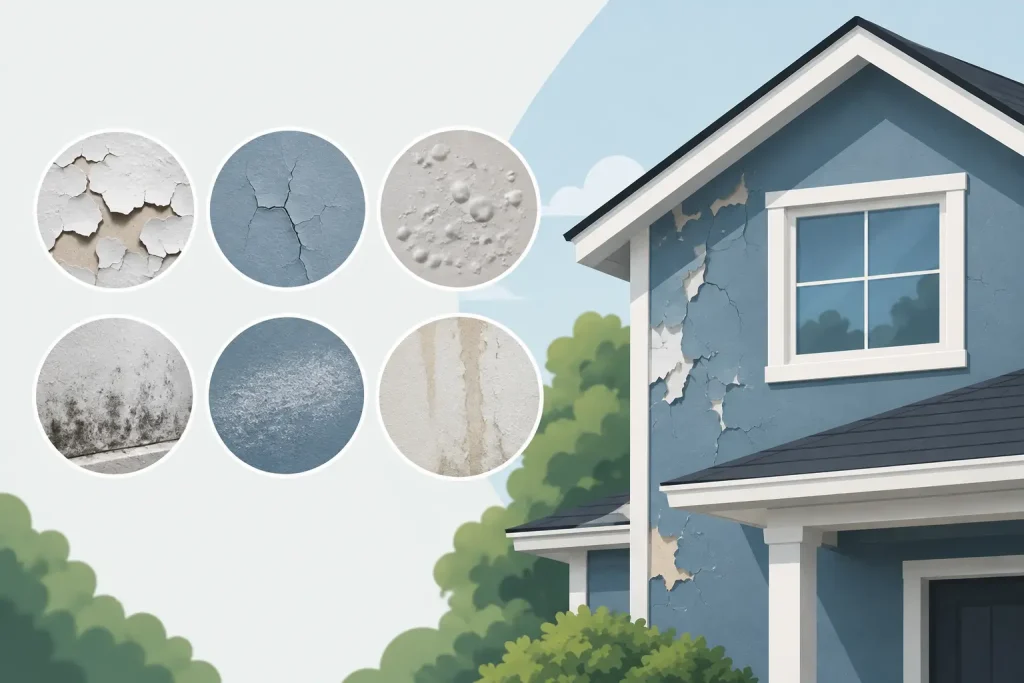
Paint rarely fails without giving a warning first. The early signs of paint failure can look cosmetic – a small bubble near a window, a fine crack on a rendered wall or chalky residue on your hand – but they often point to moisture, surface preparation issues or a coating that has reached the end of its service life.
For Melbourne property owners and managers, acting early is usually the difference between a planned repaint and costly repairs to timber, plaster, render or steel. The right response depends on the surface, its exposure to weather and the cause behind the defect. Simply applying another coat over a problem area may hide it briefly, but it will not provide a lasting finish.
8 signs of paint failure to watch for
1. Peeling or flaking paint
Peeling is one of the clearest indicators that paint has lost adhesion. It may lift in small chips around window frames and eaves, or come away in larger sheets from exterior weatherboards, fascia boards and rendered surfaces.
Moisture is a common cause. Water can enter behind the paint film through failed sealant, leaking gutters, damaged flashing or cracks in the substrate. Poor preparation can also be responsible, particularly where old loose paint, dust, oil or chalky residue was painted over. In some cases, the previous coating system was simply incompatible with the new paint.
Peeling paint should not be treated as a touch-up job until the source of moisture has been identified. The affected coating needs to be removed back to a sound edge, the surface repaired and correctly primed before repainting. If bare timber is exposed, prompt attention is particularly important to prevent water damage and decay.
2. Blistering and bubbling
Bubbles beneath the paint surface are usually caused by trapped moisture, heat or air. On exterior walls, blistering often appears on areas that receive strong afternoon sun. On internal ceilings and walls, it can signal a roof leak, plumbing issue, condensation or inadequate ventilation.
Not every bubble has the same cause, which is why inspection matters. Heat blisters may occur when paint was applied to a very hot surface or before an undercoat had cured. Moisture blisters can indicate an active building issue that must be resolved before any repainting starts.
A contractor should test the affected area rather than assume the paint is at fault. Recoating a damp wall can lead to the same failure within months.
3. Cracking, crazing or alligatoring
Fine hairline cracks can develop as paint ages, especially on exposed exterior elevations. More severe cracking, sometimes called crazing or alligatoring, creates a patterned surface that resembles dry, cracked mud.
This type of failure may occur when too many coats have built up over time, when a hard coating has been applied over a softer one, or when paint was applied too thickly. Movement in timber, plaster or render can also create cracks that paint cannot bridge.
The practical question is whether the crack is only in the coating or continues into the substrate. A cracked paint film may require scraping, sanding and a suitable primer. Cracks in render, plaster or cladding may need repair first. On a strata complex or commercial property, repeated cracking in the same location can indicate a broader maintenance issue worth documenting.
4. Chalking on exterior surfaces
If you run your hand over an exterior painted wall and pick up a powdery residue, the coating is chalking. This happens as sunlight and weather gradually break down the binder in paint, leaving pigment on the surface.
A small amount of chalking can be expected on older exterior coatings. Heavy chalking, however, means the existing paint is no longer providing dependable protection or a suitable base for a new coat. Applying fresh paint directly over it can result in poor adhesion and premature failure.
Thorough washing and surface preparation are essential. The correct preparation method will vary between masonry, fibre cement, timber and metal, so there is no one-size-fits-all solution. The aim is to remove unstable material and create a clean, sound surface for the new coating system.
5. Fading, patchiness and loss of colour
Fading is often gradual, so it is easy to overlook until a touch-up no longer matches the surrounding wall. Melbourne’s UV exposure can be tough on dark, bright and heavily exposed exterior colours, especially on north- and west-facing façades.
Fading alone does not always mean the paint has failed structurally. It does, however, affect the presentation of a home, retail frontage, school or office building. When fading is combined with chalking, thinning paint or poor water beading, a full repaint is generally more sensible than isolated touch-ups.
Colour selection matters for longevity. Dark colours can absorb more heat and place greater stress on some substrates, while lower-quality coatings may lose colour sooner. A professional painter can advise on colours and paint specifications suited to the building material and exposure level.
6. Staining, mould and mildew
Dark spotting, green growth and recurring stains are not simply cleaning problems. They often indicate persistent moisture, poor drainage, shaded conditions or limited airflow. You may see mould in bathrooms, laundries and poorly ventilated rooms, while mildew and algae are common on sheltered exterior walls, fences and eaves.
Paint can resist mould growth, but it cannot solve a ventilation or water-ingress problem. Cleaning without addressing the cause will usually produce a short-lived result. Internal mould should prompt checks of exhaust fans, condensation and possible leaks. External growth may require attention to gutters, downpipes, drainage, overhanging vegetation or wall exposure.
Once the area is dry and the underlying issue is controlled, affected surfaces need appropriate cleaning and treatment before repainting. This is especially relevant in rental, strata and commercial settings where recurring mould can become a maintenance and occupant-comfort concern.
7. Rust bleeding through painted metal
Orange-brown stains on railings, gates, steel frames or metal roofing are a warning that corrosion has started beneath or through the coating. Left untreated, rust expands and lifts the paint film, exposing more metal to moisture and accelerating the problem.
The repair must go beyond covering the stain. Loose rust and failed paint need to be removed, the metal prepared to the required standard and a compatible anti-corrosive primer applied before topcoating. The required coating system depends on the item, its condition and whether it is exposed to rain, salt air, industrial conditions or frequent handling.
For commercial and industrial properties, corrosion control is not merely cosmetic. It can affect the service life, safety and appearance of handrails, doors, plant enclosures and structural steel.
8. Soft, sticky or uneven paint
A painted surface should cure to a firm, consistent finish. If it remains tacky, marks easily, feels unusually soft or shows uneven sheen, the paint may not have cured correctly. Common causes include applying paint in unsuitable conditions, insufficient drying time between coats, incorrect mixing, contamination or incompatible products.
This issue is often most obvious on doors, skirting boards, cabinetry and high-traffic commercial surfaces. A sticky door frame or marked wall can quickly undermine an otherwise tidy fit-out.
The remedy depends on the extent of the problem. Minor defects may be corrected through preparation and recoating, while widespread curing failure may require removal of the affected paint. Trying to rush a finish in poor weather or on an unprepared surface usually costs more time in rework.
Why paint failure should be assessed before repainting
Paint is part of a protective system, not just a decorative layer. On timber it helps manage moisture exposure. On steel it helps slow corrosion. On render and masonry it provides a clean, durable finish while accommodating the conditions of the substrate.
That is why the preparation stage carries so much weight. A proper assessment considers the existing coating, moisture levels, surface condition, movement, repairs, previous paint types and access requirements. It also considers how the property is used. A family home, busy school corridor, strata stairwell and industrial facility may all require different products, scheduling and durability expectations.
A good repaint does not always mean stripping every surface back to bare material. Where existing paint is sound, it can often be cleaned, sanded, spot-primed and recoated effectively. Where the coating is unstable or the substrate is compromised, more extensive preparation is the only reliable option. The right scope is based on condition, not guesswork.
When to call a professional painter
Call for an assessment when paint defects are widespread, return after previous touch-ups, involve water staining or mould, expose bare timber or metal, or affect elevated and difficult-to-access areas. Commercial, strata and heritage properties also benefit from a clear scope of works that accounts for site safety, resident or tenant access and minimal disruption.
The Scotsman Painters assesses the cause as well as the visible defect, then recommends a practical coating system suited to Melbourne conditions and the demands of the property. Qualified, insured tradesmen can manage preparation, repairs and repainting with attention to programme, safety and finish quality.
A failing paint surface is best dealt with while it is still a manageable maintenance job. Address the warning signs early, and your next repaint can protect the property as well as improve how it looks.