
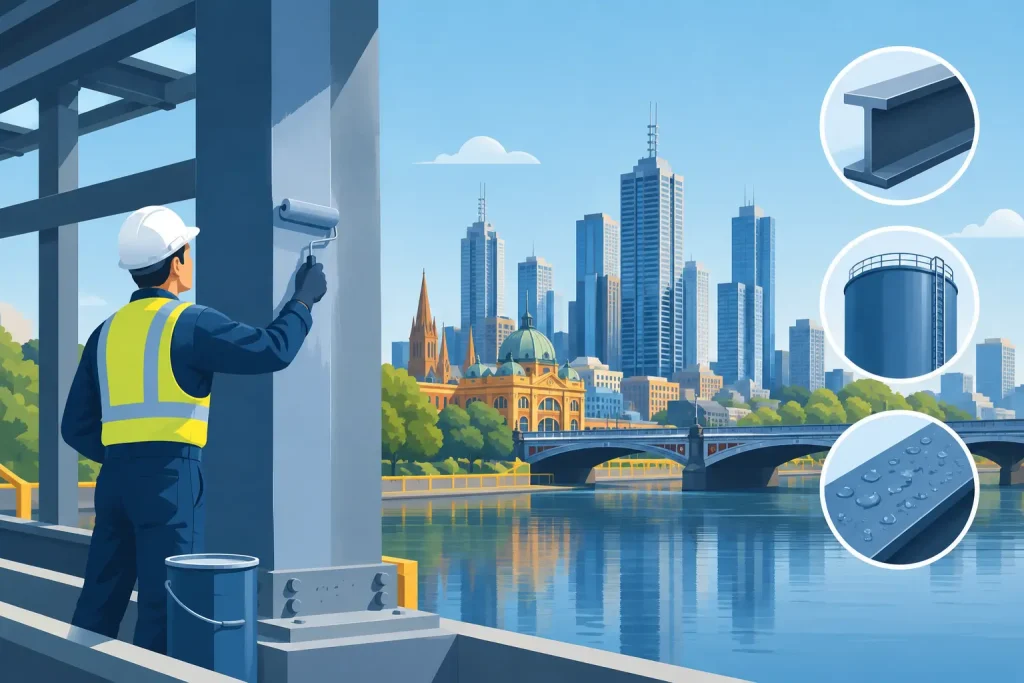
A steel handrail beside Port Phillip Bay can show corrosion far sooner than expected. A warehouse floor can fail under forklift traffic even when it looked sound at handover. Industrial coatings are specified to prevent these costly problems, but only when the coating system, surface preparation and application method suit the site.
For facilities managers, property owners and commercial decision-makers, paint is not simply a finishing item. It is a protective layer that helps extend the life of steel, concrete, machinery, tanks, floors and external structures. Choosing the cheapest product or rushing preparation may reduce the upfront price, but it often creates a larger maintenance bill later.
What industrial coatings are designed to do
Industrial coatings are high-performance protective finishes used in demanding commercial and industrial environments. Unlike standard decorative paint, they are selected for their ability to withstand particular conditions, such as moisture, ultraviolet exposure, chemical splash, abrasion, heat, salt air or regular wash-downs.
The right system can protect substrates from corrosion, reduce surface deterioration and make cleaning easier. It can also improve safety. Clearly coated line markings, non-slip flooring and high-visibility finishes all help create safer, more workable sites.
There is no single product that suits every industrial setting. A coating that performs well on a sheltered steel frame may not be suitable for a food processing area, a basement car park or a coastal plant room. The substrate, site conditions and expected use need to be assessed before work begins.
Choosing industrial coatings for the environment
A practical coating specification starts with exposure. Melbourne properties deal with changing temperatures, winter moisture and strong UV conditions. Sites near the bay or in corrosive industrial areas need even closer consideration, particularly where steelwork is exposed.
Steel and structural metal
Steel needs protection from oxygen and moisture, which is why surface preparation is as important as the topcoat. Depending on the condition of the metal, work may involve removing rust, failed paint and contaminants before applying a compatible primer and protective finish.
For exposed structures, a multi-coat system is commonly required. This may include an anti-corrosive primer, an intermediate build coat and a UV-resistant topcoat. Each layer has a purpose, and skipping one can compromise the system. Edges, welds, bolts and joints deserve particular care because they are common starting points for corrosion.
Concrete floors and walls
Concrete can look solid while holding moisture, oil residue or weak surface laitance. If a coating is applied over a poorly prepared slab, it may blister, peel or delaminate under traffic.
Industrial floors often require mechanical preparation to create a clean profile for adhesion. The final coating may be selected for forklift use, pedestrian traffic, chemical resistance or slip resistance. A warehouse aisle and a commercial kitchen have different demands, so the same floor coating should not be assumed to suit both.
Areas exposed to chemicals or regular cleaning
Workshops, manufacturing areas, plant rooms and wash-down zones may need a coating system that resists oils, fuels, detergents or chemical splashes. The key question is not whether the area is industrial. It is what the surface will actually encounter, how often, and for how long.
A chemical-resistant finish may cost more than a general-purpose product, but it can be the sensible choice where premature failure would interrupt operations. It is equally important to allow the specified cure time before returning the area to service.
Surface preparation decides the result
Most coating failures are linked to preparation, contamination or incorrect application conditions rather than the brand of paint alone. A high-quality coating cannot bond properly to loose material, chalky paint, oil, salt deposits or damp surfaces.
Preparation may include pressure washing, degreasing, grinding, sanding, abrasive blasting or repairs to damaged substrate. The method depends on the surface and the specified coating system. For example, blasting may be appropriate for heavily corroded steel, while grinding and crack repair may be more relevant for a concrete floor.
Moisture testing is also critical for concrete. Applying a non-breathable coating to a slab with excessive moisture can lead to failure from below. On external work, weather matters too. Rain, condensation, wind and temperature affect application and curing. A dependable contractor plans around these factors instead of hoping the finish will hold.
Balancing protection, appearance and budget
Industrial work is often driven by function, but presentation still matters. A well-finished facility gives staff, tenants, visitors and clients confidence that the site is properly maintained. Colour coding can identify services and hazards, while clean walls and floors improve the overall working environment.
The best value is rarely the lowest initial quote. It is the system that provides the required protection for a realistic maintenance cycle. A basic coating may be suitable for a low-use internal storage area. In a high-traffic loading zone, it may need frequent repairs that quickly outweigh the original saving.
When comparing proposals, check what is included in the scope. Preparation standards, repair allowances, primer coats, film thickness, access equipment, protection of surrounding areas and curing time can all affect the final outcome. A clear scope helps avoid variations and allows like-for-like comparisons.
Planning work around site operations
Industrial painting should be organised to limit disruption. Many sites cannot simply close while floors, steelwork or walls are being treated. Access routes, deliveries, staff movement and safety controls need to be considered before the first surface is prepared.
A staged programme can keep sections of a facility operating while work progresses elsewhere. For floor coatings, this may mean completing bays in sequence and allowing each area to cure before traffic returns. For elevated steelwork, appropriate access equipment and exclusion zones protect people below while allowing the project to continue safely.
Clear communication is particularly valuable in occupied warehouses, schools, strata properties and commercial buildings. Site managers need to know where work is occurring, when an area will be unavailable and what precautions are in place. Reliable scheduling is not an extra. It is part of professional project delivery.
Signs a protective coating needs attention
Early maintenance is generally simpler and more affordable than extensive restoration. Look for rust staining, bubbling, peeling, chalking, cracking, worn traffic paths or exposed substrate. On floors, loss of grip and areas that are difficult to clean can also signal that the coating is reaching the end of its service life.
Not every defect calls for a full repaint. Localised repairs can be effective where the wider system remains sound. However, patching over widespread adhesion failure will only postpone the issue. An experienced assessment should identify whether targeted repairs, thorough preparation and recoating, or a new system is the sensible option.
Why qualified application matters
Industrial coating systems are technical products with requirements for mixing, application rate, recoat windows and curing conditions. Following those requirements protects the manufacturer’s intended performance and gives the asset owner greater confidence in the result.
Qualified, insured tradesmen also bring practical site discipline: safe access, protection of adjacent assets, careful masking, tidy work areas and attention to detail at vulnerable edges and joints. The Scotsman Painters applies this same considered approach across industrial, commercial and managed-property projects throughout Melbourne.
Before approving a coating project, ask what the substrate condition is, what exposure the finish must handle and how the work will affect operations. A clear answer to those three questions will help you invest in a finish that looks right on day one and keeps protecting the property well after the painters have left site.