
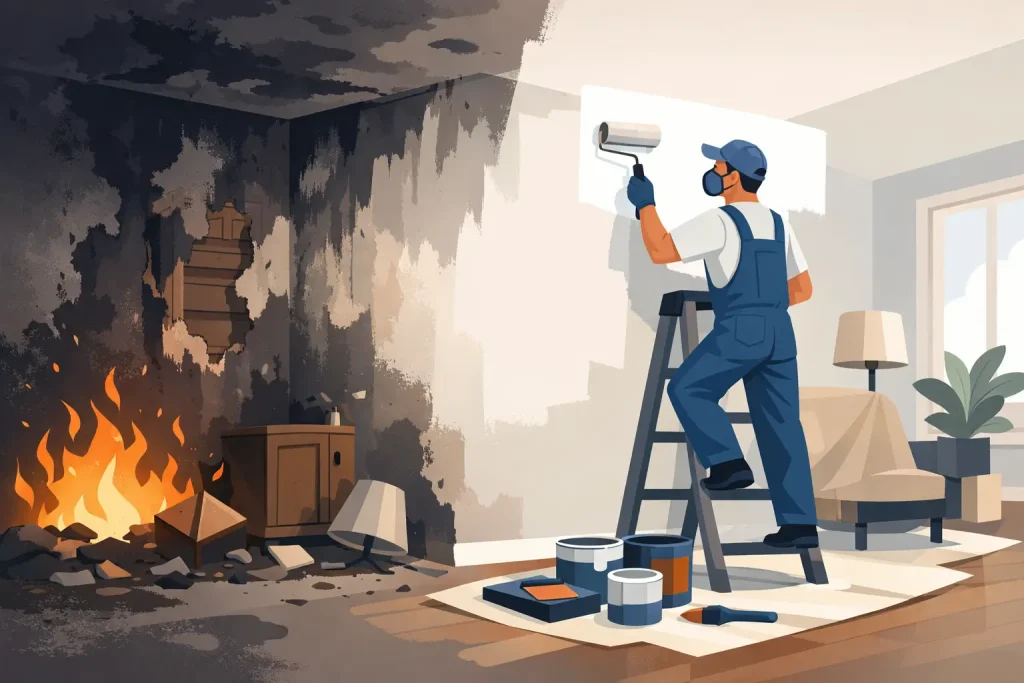
A fire can leave a room looking ready for paint long before it is actually ready. Smoke staining, soot residue and heat damage often sit beneath the surface, and painting too soon can lock in odours, cause coatings to fail and turn a repair into repeat work. Proper fire damage painting repairs begin with a careful assessment of what happened to the substrate, not a quick choice of wall colour.
For Melbourne homeowners, body corporates and facilities managers, the priority is usually clear: restore the property safely, present it well and avoid unnecessary disruption. That requires a methodical painting process that deals with the cause of staining before the finish coat goes on.
Why fire damage cannot be painted over
Smoke travels further than flames. It can move through hallways, ceiling cavities, air-conditioning pathways and adjoining rooms, leaving a fine residue on plaster, timber, metal, doors and trims. Some soot is dry and powdery, while other deposits are greasy or sticky, particularly where synthetic materials have burned.
A standard acrylic topcoat is not designed to block this contamination. If soot has not been removed and the affected surface has not been properly sealed, brown or yellow marks can bleed back through the new paint. Smoke odour may also remain noticeable once a property is closed up again, especially during warmer weather.
Heat introduces another issue. Plasterboard may crack, blister or lose integrity, timber can char or distort, and existing paint may lose adhesion even where it looks intact. The right repair depends on the severity of the fire, the materials involved and whether water used to extinguish the fire has also affected the building.
The correct order for fire damage painting repairs
Painting is generally one of the final stages of a fire restoration project. Before work begins, the site needs to be safe, dry and structurally sound. This is particularly important in occupied homes, schools, offices and apartment buildings where dust, odours and access need to be managed carefully.
1. Assess the damage and isolate affected areas
The first step is to identify visible staining, odour-affected surfaces, blistered coatings and any damaged plaster, timber or metalwork. A painter should also look beyond the fire room. Ceilings, cornices, window reveals and nearby common areas can require treatment even when they show only light discolouration.
Where fire restoration is part of an insurance claim, documenting the condition before repairs helps keep the scope clear. It also helps prevent a common problem: approving a repaint only to find later that damaged linings or persistent smoke contamination require additional work.
2. Clean soot and smoke residue thoroughly
Surface preparation is where the quality of the finished job is decided. Loose soot must be removed without spreading it further across the room. Depending on the surface and level of contamination, this can involve specialised dry cleaning methods, careful vacuuming and washing with suitable cleaning products.
Simply wiping black residue with a damp cloth can smear oils into the surface. On porous plasterboard, unsealed timber or textured ceilings, that can make staining harder to contain. The cleaning method needs to suit the substrate, and heavily contaminated materials may need replacement rather than treatment.
3. Repair damaged substrates before sealing
Cracked plaster, heat-affected cornices, damaged skirting boards and softened timber should be repaired or replaced before paint preparation continues. Water damage is also worth checking. Firefighting water can cause swelling, mould risk, stains and weakened plasterboard, even when the fire itself was contained quickly.
This stage is not one to rush. Painting over compromised plaster or timber may make the room look better temporarily, but it will not deliver a durable result. A sound, dry substrate gives primers and topcoats the stable base they need.
4. Apply the right stain-blocking sealer
After cleaning and repairs, affected areas need a quality stain-blocking primer or sealer. The product selection matters. Smoke and nicotine stains, tannin bleed from timber, water marks and heavy soot contamination may require different sealing systems.
A professional painter will test and assess the surface rather than assume one primer suits every situation. In some cases, one sealing coat is sufficient. In others, additional coats or spot priming are needed before the final paint system can be applied. This is the step that prevents stains and odours from returning through fresh paint.
5. Repaint with a finish suited to the space
Once sealing is complete, ceilings, walls, trims and doors can be repainted to restore a clean, consistent appearance. The best sheen level depends on the room and its use. Washable low-sheen finishes are often practical for living areas and offices, while higher-durability coatings may suit corridors, schools, commercial spaces and common property areas.
Colour matching can be an option for isolated repairs, but repainting an entire wall or room often produces the more even result. Existing paint fades over time, and a patch that matches on a colour chart can still stand out under natural light.
When repainting is not enough
There is a point where painting repairs are no longer the right solution. Charred timber, severely smoke-affected insulation, crumbling plasterboard and heavily contaminated soft furnishings may need specialist restoration or replacement before a painter can complete the finishing work.
Persistent odours are another warning sign. Paint can seal a prepared surface, but it cannot resolve smoke trapped in carpets, ductwork, insulation or other materials outside the paint scope. A coordinated restoration approach may be required, particularly after a significant kitchen fire, electrical fire or commercial incident.
For strata and commercial properties, access and continuity also influence the scope. Work may need to be staged around residents, staff, students or customers. Clear site protection, safe work practices and realistic scheduling reduce downtime while allowing each coating to cure properly.
What to expect from a professional painting contractor
A dependable fire repair painting contractor should provide a clear scope that separates cleaning, substrate repairs, sealing and repainting. That clarity matters for budgets, insurance documentation and programme planning. It also gives property owners a realistic understanding of what is included and what may sit with another restoration trade.
Look for qualified and insured tradesmen who can work safely in residential and commercial environments. If access equipment is required for high ceilings, stairwells or multi-storey façades, the contractor should have the capability and planning in place to manage it safely. For occupied buildings, containment, tidy work areas and communication around access are just as important as the final finish.
The Scotsman Painters approaches restoration painting with the same discipline applied to any high-quality repaint: inspect carefully, prepare thoroughly and use the right coating system for the surface. More than 30 years of Melbourne painting experience has shown that shortcuts in preparation are usually the most expensive part of any repair.
Protecting the finish after restoration
Once repainting is complete, allow adequate curing time before heavy cleaning or moving furniture tightly against walls. Keep the area ventilated where practical, particularly after sealing and painting, and address any new water leaks promptly. A water stain that appears after fire repairs may be unrelated to the fire itself, but it can undermine a newly finished surface if left unresolved.
Keep records of the products used, colours selected and areas repaired. This is useful for future maintenance, insurance files and strata records. In commercial premises, it can also make later touch-ups more efficient when tenancy changes or routine maintenance is required.
A clean coat of paint is the visible result of fire restoration, but it should never be the first response. When the surface is cleaned, repaired and sealed properly, the repaint becomes what it should be: a durable finish that helps the property feel safe, functional and cared for again.