
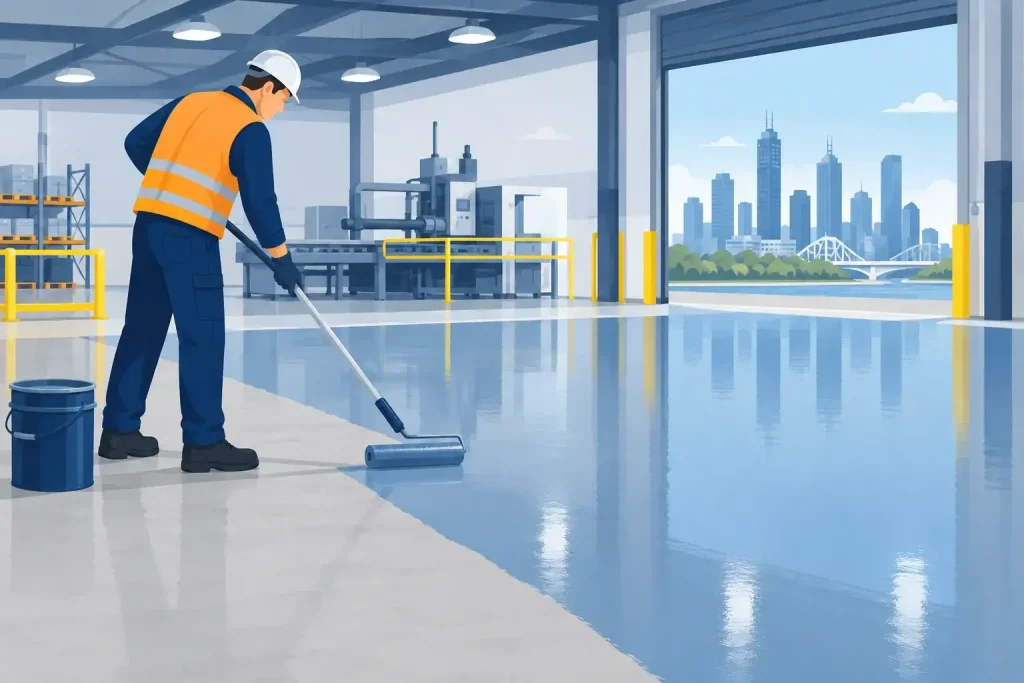
A factory floor is not simply a large concrete slab. It carries forklifts, pallet jacks, foot traffic, chemical spills, dropped stock and constant cleaning. This factory floor coating guide explains how Melbourne facilities can choose a coating system that suits the work happening on site, rather than selecting on appearance or upfront price alone.
The right coating can improve safety, simplify cleaning and protect the concrete from premature damage. The wrong system can peel, wear through or create avoidable shutdowns. A sound result starts with understanding the floor, the operating conditions and the preparation required before a coating is applied.
Start with the demands on the floor
Every industrial floor has a different job to do. A light assembly area may need a clean, dust-free finish with marked walkways. A busy warehouse needs strong abrasion resistance under forklifts and hard wheels. Food production, automotive workshops and manufacturing facilities may also need resistance to oils, detergents, acids or other chemicals.
Before choosing a product, consider the type and weight of traffic, how often the area is washed, the likelihood of spills and whether the floor is exposed to sunlight or temperature changes. Also consider the consequences of a slippery surface. Loading bays, wet-process areas and pedestrian routes often need a slip-resistant finish, but excessive texture can make cleaning harder. The best balance depends on the area and its use.
It is also worth looking ahead. If racking layouts, machinery or production processes are likely to change, select a system that can be repaired or extended without creating a patchwork appearance across the floor.
Factory floor coating guide: choosing the right system
There is no single best factory floor coating. The appropriate system depends on the condition of the concrete, the expected traffic and the practical requirements of the facility.
Epoxy coatings
Epoxy is a common choice for factories, warehouses and workshops because it provides a hard-wearing, easy-to-clean surface. It is available in a wide range of colours and can include line marking, safety zones and anti-slip additives. When the substrate is properly prepared, epoxy can offer excellent protection against abrasion and many common industrial spills.
Its limitations matter too. Standard epoxy can yellow when exposed to strong UV light, so it is generally better suited to enclosed internal spaces than open loading areas. It also requires suitable curing conditions and can be sensitive to moisture in the concrete.
Polyurethane coatings
Polyurethane systems are often selected where floors are exposed to UV light, temperature movement or regular thermal cycling. They generally retain their colour better than epoxy and can provide a slightly more flexible finish.
These systems are useful in areas with large doors, indirect outdoor exposure or changing temperatures. They are not automatically the right answer for every factory, however. The coating build, preparation method and chemical exposure still need to be assessed before work begins.
Methyl methacrylate and fast-curing systems
Fast-curing systems can be valuable where a shutdown must be kept short. Some coatings can return to service far sooner than traditional epoxy, which may suit high-output plants, retail back-of-house areas or facilities that cannot afford several days out of action.
The trade-off is that fast-curing products require careful planning, experienced application and close control of ventilation and site conditions. They are a practical option when downtime is the main constraint, not a shortcut around floor preparation.
Heavy-duty screeds and repair systems
Where concrete is badly pitted, cracked or affected by heavy point loads, a thin coating may not be enough. A heavy-duty resin screed or repair mortar can rebuild damaged areas before the final finish is applied. This costs more at the start but may prevent repeated repairs and ongoing disruption in high-impact zones.
Preparation decides the lifespan
Most coating failures are not caused by the topcoat itself. They happen because the concrete was contaminated, too smooth, too damp or not repaired correctly before coating.
A professional assessment should identify existing sealers, oil contamination, laitance, old paint, cracks, spalling and moisture issues. Concrete that looks clean can still hold contaminants that stop a new coating from bonding. Mechanical preparation, such as diamond grinding or shot blasting, creates the right surface profile for the selected coating system.
Cracks and joints need special attention. Some cracks are dormant and can be repaired before coating. Others move with the slab and may need a flexible joint treatment. Coating over active movement without addressing it first can lead to cracking through the new finish.
Moisture testing is equally important, particularly on older slabs or ground-level floors. Melbourne’s changing weather and moisture movement through concrete can affect adhesion. If moisture levels are too high for the chosen system, a suitable moisture barrier or alternative coating approach may be required.
Plan works around operations, not the other way around
A factory floor coating project needs more than a crew and a product. It needs a staging plan that keeps people safe and protects production where possible.
For some sites, work can be completed in sections over nights or weekends, allowing stock and equipment to move progressively. For others, a planned shutdown is more efficient and produces a cleaner result. The right approach depends on access, cure times, forklift routes, ventilation and whether equipment can be relocated.
Clear communication avoids costly surprises. Facilities managers should confirm access times, isolation requirements, dust-control expectations, waste removal, loading arrangements and the handover point for each completed zone. Fresh coatings need protection during curing, so return-to-service times for pedestrian traffic, forklifts and heavy machinery should be agreed in advance.
Qualified, insured tradesmen with the appropriate site inductions and White Cards help ensure work is completed with safety requirements front of mind. This is particularly relevant in operating factories where contractors must work around staff, plant and established traffic management procedures.
Build safety into the finish
A coated floor can make a workplace safer when its design supports how people and vehicles actually move through the space. Colour-coded bays, pedestrian aisles, exclusion zones, loading areas and emergency access routes can improve visibility and organisation across the floor.
Line marking should be planned as part of the coating system, not added as an afterthought. Consider forklift turning circles, door clearances, storage layouts and areas where staff regularly cross vehicle paths. In wet or spill-prone sections, an anti-slip additive can provide better grip. The texture should be matched to the risk level because a heavily textured floor may trap dirt and increase cleaning time.
Light-reflective colours can also improve visibility in enclosed work areas. While a bright floor will show dirt sooner, that can be an advantage where housekeeping and spill detection are important.
Look beyond the initial quote
The lowest price is rarely the lowest cost over the life of a factory floor. A cheaper coating applied over poorly prepared concrete may require repairs within a short period, bringing more downtime, safety risks and disruption to operations.
When comparing proposals, check what is included in the scope. The coating type and thickness, preparation method, concrete repairs, moisture testing, line marking, anti-slip treatment and curing schedule should be clearly explained. A proper quote also identifies what the contractor needs from the site before work starts.
For Melbourne businesses, local experience matters because the contractor needs to understand active commercial and industrial sites, programme work around operational constraints and maintain clean, controlled work areas. The Scotsman Painters brings more than 30 years of painting experience to surface finishing projects, with careful planning focused on workmanship, safety and minimal disruption.
Maintain the coating once it is installed
Even a high-quality coating needs sensible maintenance. Sweep abrasive grit regularly, clean spills promptly and use cleaning chemicals that are compatible with the finished system. Dragging sharp pallets or unprotected equipment across the surface can damage any coating, particularly at doorways and turning points.
Inspect high-traffic areas periodically for chips, wear or lifting edges. Small repairs completed early are generally straightforward. Left untreated, damaged sections can allow moisture and contaminants beneath the coating, making later repairs more extensive.
A well-specified floor coating is an investment in the way your facility operates every day. Take the time to assess the slab, the traffic and the shutdown window before committing to a system. That preparation gives the finished floor the best chance of staying safe, clean and dependable for years of service.