
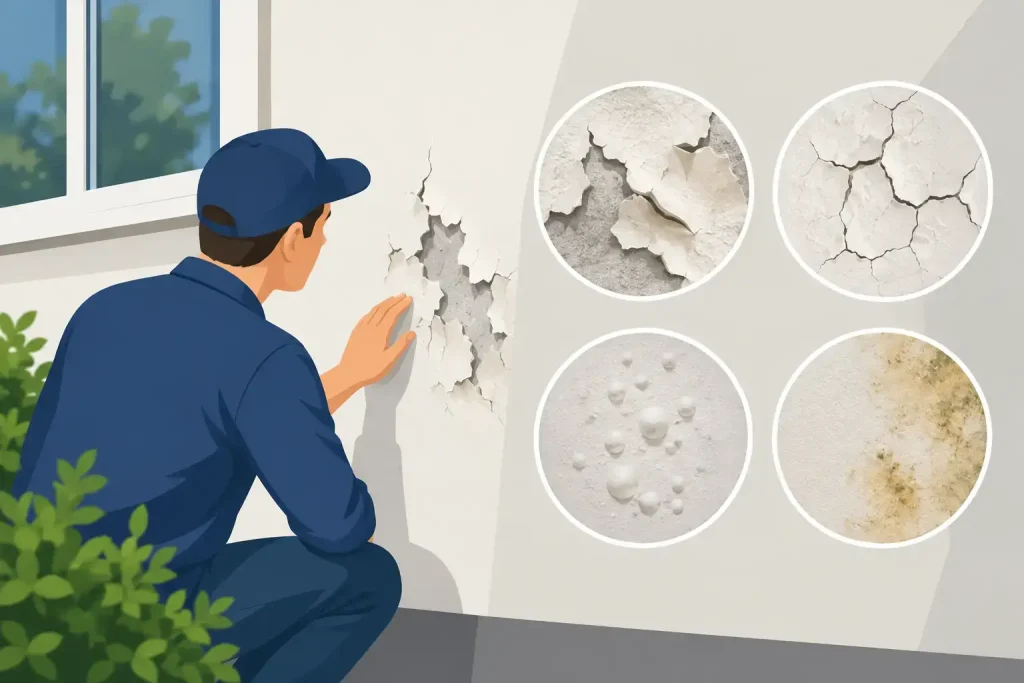
A paint finish rarely fails without warning. A small bubble near a bathroom ceiling, fine cracking on a weatherboard, or powdery residue on an external wall can be the first visible sign of a bigger issue beneath the surface. Knowing the common paint failure signs helps Melbourne property owners act before a straightforward repaint becomes a larger repair involving damaged plaster, timber, render or steel.
Paint does more than improve appearance. It protects a property from moisture, ultraviolet exposure, everyday wear and, in commercial settings, the demands of heavy traffic and regular cleaning. When that protective layer breaks down, the cause needs to be identified before fresh paint goes on. Otherwise, the same problem is likely to return.
Why paint fails
Paint failure is not always caused by poor-quality paint. More often, it comes down to preparation, moisture, unsuitable products or environmental conditions during application. Melbourne’s changing weather can be particularly tough on exterior coatings, with strong sun, rain and cold, damp periods placing different stresses on a building throughout the year.
A surface painted while damp, dirty or chalky will not hold a coating properly. Likewise, paint applied to an incompatible existing finish, or without the correct primer, may look sound at first but fail prematurely. Leaks, condensation and rising damp can also push moisture behind the paint film, causing damage that no topcoat alone can solve.
For strata buildings, schools, offices and managed sites, delayed maintenance can turn a local issue into a recurring operational problem. Early inspection allows repairs to be planned around occupants and business activity, rather than dealt with urgently after damage worsens.
Paint failure signs to look for
Peeling and flaking paint
Peeling is one of the clearest signs that paint has lost adhesion. It may lift away in small flakes, larger sheets or around vulnerable areas such as window frames, eaves, gutters and external timber trims. On internal walls, peeling paint is often associated with moisture from a leak, poor ventilation or condensation.
The repair depends on why the coating released. If the substrate is dry and stable, loose paint can be removed, the edges feathered, the surface prepared and repainted with a suitable system. If water is getting in behind the paint, the source of the moisture must be repaired first. Painting over active moisture simply hides the problem for a short time.
Blistering and bubbling
Blisters are raised bubbles in the paint film. Some are small and isolated, while others spread across broad areas of a wall or ceiling. They can occur when moisture or air becomes trapped beneath the coating, or when paint is applied in excessive heat and dries too quickly on the surface.
Exterior blistering often appears on sun-exposed elevations or timber that has absorbed water. Inside, look closely at bathroom ceilings, laundry walls and areas below roof spaces or plumbing. A professional inspection can determine whether the issue is surface-related or a symptom of a leak, which makes a significant difference to the scope of work.
Cracking and crazing
Fine, shallow cracks in paint are commonly called crazing. They can develop when paint is applied too thickly, when coats have not been allowed to dry properly, or when a brittle old coating is covered with a less flexible product. Wider cracks may point to movement in timber, plaster or render rather than the paint alone.
Not every crack requires major building work, but it should not be ignored. Hairline cracking on an older rendered façade may be mostly cosmetic. Cracks that continue to widen, run from window corners or allow water into the surface need closer investigation before repainting. The correct repair may involve flexible fillers, patching compounds or specialised coatings designed to accommodate movement.
Chalking and fading
Run a hand over an older exterior wall. If it leaves a dusty, coloured residue on your fingers, the coating is chalking. This happens as binders in the paint break down from ultraviolet exposure, leaving pigment on the surface. Fading is another common effect of weathering, especially on dark or bright colours exposed to direct sun.
Chalking is easy to overlook because a wall may still appear intact from a distance. Yet paint applied over an unwashed chalky surface will struggle to adhere. Thorough cleaning and appropriate priming are critical before repainting. In some cases, choosing a higher-grade exterior coating and a more suitable colour can improve long-term performance, though no paint is completely immune to harsh exposure.
Mould, mildew and staining
Dark spotting on painted surfaces is often blamed on paint, but mould and mildew are usually moisture and ventilation problems first. Bathrooms, laundries, kitchens, shaded external walls and poorly ventilated rooms are common locations. Simply coating over mould without cleaning and treating the affected area can allow it to return through the new finish.
Water stains on ceilings and walls deserve the same attention. A brown ring or discoloured patch may be from a roof leak, overflowing gutter, failed flashing or plumbing issue. Even once the source has been fixed, stained areas often need sealing with the correct stain-blocking primer before topcoats are applied.
Rust stains and corrosion
On steel fences, balconies, handrails, lintels and industrial surfaces, rust is a warning that the protective coating has failed. Rust staining around screws or fixings can also signal localised corrosion beneath the paint. Left unattended, corrosion expands and can compromise the substrate itself.
Preparation is the deciding factor here. Loose rust must be removed, the surface cleaned and treated as required, and the right primer and protective coating system applied. A quick topcoat may improve the appearance temporarily, but it will not stop corrosion that remains underneath.
When repainting is enough and when repairs come first
A repaint is often sufficient when the existing coating is sound, the surface is clean and dry, and the issue is mainly fading or light wear. Proper washing, sanding, spot priming and carefully selected topcoats can restore the finish and extend protection.
More extensive preparation is needed where paint is peeling, surfaces are chalking heavily, cracks are active, or moisture has damaged the substrate. Timber may need repairs or replacement, plaster may need patching, and leaks must be rectified before paint work begins. This is where a detailed scope is valuable: it separates necessary remedial work from cosmetic painting and gives owners a clearer view of cost, timing and expected results.
For commercial and strata properties, access also affects the approach. Elevated areas may require access equipment, while occupied buildings often need staged work, clear site controls and scheduling that limits disruption. The cheapest quote is not always the most economical if preparation, safety requirements or protection of occupied areas have been left out.
How to prevent early paint failure
The most reliable prevention is a sound coating system matched to the surface and conditions. That starts with cleaning, repairs, sanding, primer selection and adequate drying time, rather than rushing to the final coat. Exterior areas should be inspected periodically, particularly timber, south-facing walls, roofline details and places where water can collect.
Maintain gutters, downpipes, seals and ventilation as well. These details may sit outside the painting scope, but they have a direct effect on whether a finish lasts. Indoors, using exhaust fans in wet areas and addressing leaks promptly helps protect both paint and the building beneath it.
A professional painter should be prepared to explain what has caused the failure, what preparation is required and which coating system suits the site. The Scotsman Painters takes this practical approach because durable work is built on careful diagnosis, not just a fresh colour.
If you have noticed peeling, bubbling, staining or cracking, take clear photos and monitor whether the area is changing. A timely assessment can protect the property, keep repair costs controlled and give the next paint finish the solid foundation it needs.