
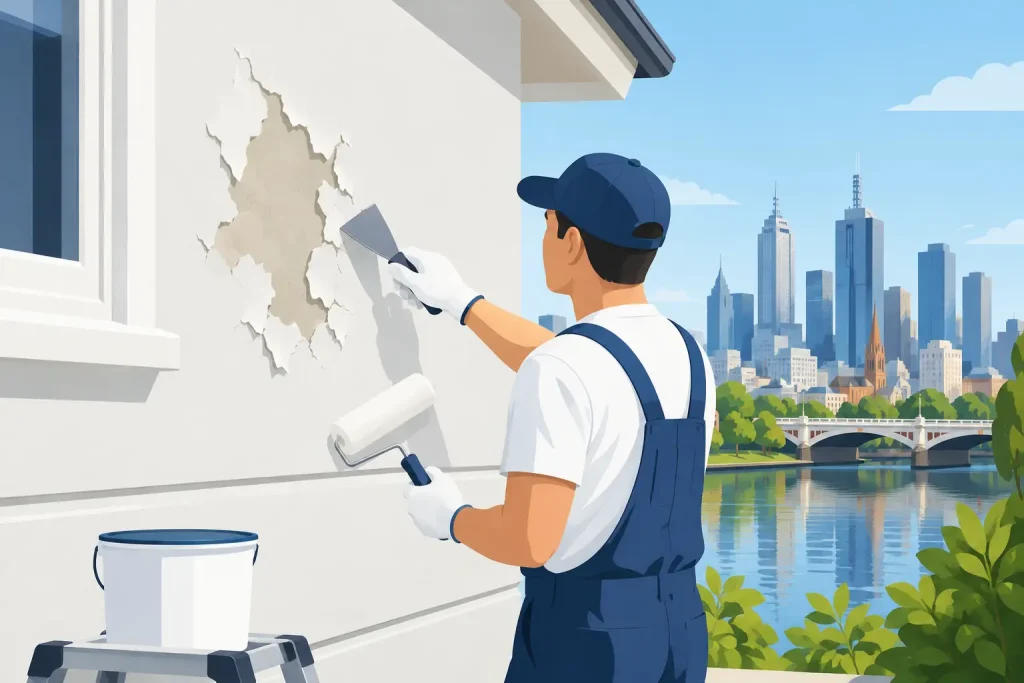
Paint does not usually peel because it has reached a certain age. It peels because the coating has lost its grip on the surface beneath it. That distinction matters. Effective peeling paint repair is not a matter of brushing fresh paint over the damaged area and hoping for the best. It means identifying why the failure occurred, preparing the surface properly and applying a compatible coating system.
For Melbourne homes, apartments, offices and commercial properties, peeling paint often appears after moisture exposure, poor previous preparation or repeated expansion and contraction caused by weather. Left unattended, a small patch can spread, expose timber or metal to damage, and make an otherwise well-maintained property look neglected.
Why paint peels in the first place
A lasting repair begins with the cause, not the visible symptom. Moisture is one of the most common culprits. Water can enter through cracked render, failed sealant, leaking gutters, roof defects, damaged flashing or poor ventilation in kitchens, laundries and bathrooms. When moisture sits behind a painted surface, it pushes the coating away from the substrate.
On exterior timber, peeling may also indicate that the timber was painted while damp, that end grain was not sealed, or that a previous coating has broken down under sun and rain. In Melbourne, exposed elevations can face intense UV, cold mornings and wet weather within the same season. These changes place pressure on coatings, particularly where maintenance has been delayed.
Poor adhesion is another frequent cause. Paint will not bond reliably to chalky surfaces, loose old coatings, glossy finishes, dust, grease or residue from cleaning products. Applying a water-based paint over an unsuitable older coating without the right preparation can also result in lifting or peeling.
For strata and commercial buildings, isolated peeling around windows, balconies, service areas or rooflines may point to a building maintenance issue rather than a painting issue alone. Repainting before the source of water is addressed only delays the next failure.
Peeling paint repair starts with assessment
Before any scraping begins, inspect the extent of the problem. Is the paint peeling in one small area, or across an entire wall? Does it occur near a window, ceiling line, downpipe or wet area? Is the substrate sound, or is there soft timber, rust, crumbling render or plaster damage underneath?
The pattern provides useful clues. Blistering and bubbling can suggest trapped moisture or heat. Flaking layers may indicate incompatible coatings or inadequate preparation between paint jobs. Paint that powders off on the hand is often chalking from weather exposure and needs stabilising before repainting.
A professional assessment should also consider the age of the property. Older coatings may contain lead. If lead paint is suspected, dry sanding, uncontrolled scraping and creating dust around occupied spaces should be avoided. The repair method needs to protect residents, workers and nearby areas from contamination.
For larger buildings, an assessment should include access requirements and site safety. Work at height, busy entryways, school grounds, shared corridors and operational businesses all need planned containment, safe access and a schedule that minimises disruption.
Fix the underlying defect first
If a leak, failed sealant joint or ventilation problem is causing the paint to peel, it must be resolved before coating work begins. Allow the affected surface enough time to dry properly. Painting over damp masonry, timber or plaster can trap moisture and compromise the new finish.
This is where a cheap repair can become expensive. A contractor may be able to make a wall look presentable quickly, but appearance is not the same as durability. The right sequence is repair the defect, dry the substrate, prepare the surface, then paint.
The preparation process that makes the difference
Preparation is the largest part of quality peeling paint repair. The exact method depends on the substrate and coating condition, but the aim is always the same: remove anything unsound and create a clean, stable surface that will accept the new system.
Loose and flaking paint is carefully scraped back to a firm edge. Sound surrounding paint may be feather-sanded so the transition between old and repaired areas is less visible after painting. On exterior surfaces, washing may be needed to remove dirt, salt, mould, chalking and airborne contaminants. Mould must be treated rather than simply painted over.
The exposed substrate then needs attention. Bare timber may require filling, sanding and a suitable primer, with particular care around joints, nail holes and end grain. Bare metal needs rust removal and an appropriate metal primer. Render and masonry may need cracks repaired and porous areas sealed. Internal plaster repairs need to be filled, sanded and primed so patching does not show through the final coats.
Primer is not an optional extra where bare surfaces, staining, repairs or difficult coatings are involved. It improves adhesion, helps create an even finish and supports the performance of the topcoat. The right primer and topcoat must work together. Using products that are incompatible with the existing surface is one of the reasons paint repairs fail early.
Choosing paint for Melbourne conditions
The best paint is not simply the most expensive tin on the shelf. It is the product suited to the surface, exposure and required finish. Exterior timber and cladding need a flexible system that can cope with movement. Render and masonry benefit from breathable coatings that manage moisture without trapping it. Interior wet areas need paints designed to withstand humidity and regular cleaning.
Colour choice also affects performance. Dark colours on sun-exposed exterior surfaces can absorb more heat and increase movement in timber or lightweight cladding. This does not mean dark colours cannot be used, but the surface condition, product selection and application method need more care.
For body corporate and commercial properties, consistency matters as much as durability. A documented colour schedule and paint specification make future touch-ups and maintenance simpler. This is particularly useful across apartment blocks, schools, offices and managed portfolios where different areas may be painted over several years.
Application conditions matter
Even excellent products can underperform when applied at the wrong time. Paint should not be applied to a wet surface, in rain, or when the substrate is excessively hot. Temperature, humidity and drying time between coats all affect adhesion and cure.
A professional painter plans around conditions rather than forcing the work through. On a larger project, this may mean sequencing elevations, protecting completed areas and allowing extra drying time after rain. It is practical planning that protects both the finish and the programme.
When a DIY repair is reasonable – and when it is not
A small, dry patch on an internal wall can often be repaired successfully by a capable property owner. If the paint failure is limited, the substrate is sound and the cause is obvious, careful scraping, sanding, spot priming and repainting may be sufficient.
The job changes when the peeling is widespread, repeatedly returns, involves an external wall, occurs near possible water ingress, or reveals damaged timber, rust or crumbling masonry. The same applies where lead paint may be present or access requires ladders, scaffolding or elevated work platforms.
Commercial and strata sites carry additional responsibilities. Occupants, visitors and staff need safe passage, work areas need to be controlled, and the project needs to stay on schedule. In these settings, a properly managed repair is often better value than repeated patch jobs that disrupt the building again a few months later.
How to protect the repair after repainting
Once the surface has been restored, routine maintenance helps prevent another coating failure. Keep gutters and downpipes clear, inspect sealant around windows and penetrations, and address roof or plumbing leaks promptly. Trim vegetation that holds moisture against external walls, and clean mould before it has a chance to spread.
For property managers, planned inspections are more cost-effective than waiting for a tenant complaint or visible deterioration. Small failures around balconies, eaves and window frames are easier to repair before water reaches the substrate or adjacent internal finishes.
A well-executed paint repair should blend into the surrounding surface and remain stable through changing weather. The Scotsman Painters approaches that result by treating preparation, product selection, site safety and clean completion as part of the same job. If peeling paint keeps returning, the most useful next step is not another quick coat. It is a proper inspection of what the surface is telling you.