
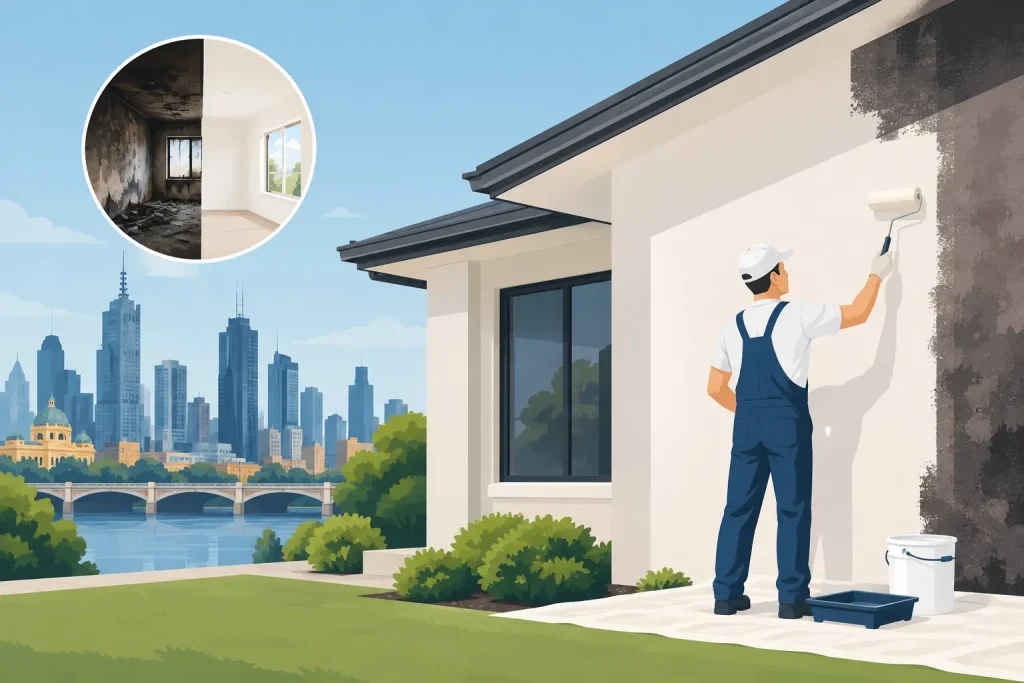
A fire can leave walls and ceilings looking deceptively sound once the obvious soot has been wiped away. The persistent odour, yellow-brown staining and fine residue tell a different story. The best fire damage paint solutions do more than improve appearances – they seal smoke contamination correctly, restore the finish and help prevent stains or odours from returning.
For Melbourne homes, apartments, offices, schools and managed buildings, successful fire restoration starts well before a paint brush reaches the surface. The condition of the substrate, the extent of smoke travel and the building’s ongoing use all determine the right repair system.
Why ordinary repainting often fails after fire damage
Smoke particles are extremely fine and can settle well beyond the room where the fire occurred. They work into plasterboard, cornices, timber trim, ceilings, joinery and porous masonry. Heat can also damage existing paint films, causing them to blister, crack or lose adhesion.
Applying standard acrylic wall paint directly over smoke staining is a common but costly mistake. Water-based topcoats can reactivate residues, allowing yellow stains to bleed through. Odours may also return when a room warms up or humidity rises. A surface may look clean at handover, then show clear signs of failure weeks later.
The remedy is not simply a heavier coat of paint. It is a controlled preparation and coating process matched to the materials affected.
Best fire damage paint solutions: the right system
The most effective solution depends on the severity of the fire, the surfaces involved and whether the building remains occupied during the work. In most cases, a professional painter will use a combination of cleaning, repairs, stain-blocking primer and a suitable finish coat.
Smoke and soot removal comes first
Painting over loose soot is never acceptable. Dry soot should be removed carefully using appropriate vacuum equipment and specialist cleaning methods. Wet cleaning without the correct process can smear residues deeper into a surface, particularly on textured ceilings, unsealed plaster and timber.
Cleaning also reveals what is cosmetic and what requires repair. A ceiling may only need sealing and repainting, while heat-affected plasterboard, damaged insulation or charred timber may need replacement. If there is any doubt about structural safety, electrical damage or hazardous materials, those matters should be assessed and resolved before painting begins.
Shellac and solvent-based stain-blocking primers
For heavy smoke staining and stubborn odours, shellac-based primers are often the strongest choice. They provide excellent adhesion to suitably prepared surfaces and are highly effective at sealing nicotine, soot and water-borne fire stains. They dry quickly, which can assist with tight restoration programmes.
The trade-off is that shellac primers have a strong smell during application and require careful ventilation, correct personal protective equipment and disciplined site management. They are generally best handled by experienced tradesmen, especially in occupied homes, common areas or commercial buildings.
Solvent-based stain blockers are another reliable option, particularly where smoke staining is moderate or where a particular surface needs a compatible sealer. The correct product must be selected for the substrate. A primer that performs well on plaster may not be the best fit for metal, timber joinery or previously coated masonry.
Water-based stain blockers for lighter damage
Low-odour water-based stain-blocking primers can be appropriate for light smoke contamination after thorough cleaning. They are more practical where ventilation is limited or where minimising disruption is a priority, such as offices, schools and occupied apartment buildings.
They are not a shortcut for severe fire damage. Where staining is heavy, the wrong water-based primer can allow discolouration to reappear through the finish coat. A test area is often worthwhile before committing to the full repaint, particularly on ceilings where bleed-through is most noticeable.
Durable topcoats restore the finished surface
Once stains and odours have been sealed, the final paint system should suit the room and level of wear. Quality low-sheen acrylic is commonly used on internal walls because it provides an even appearance and is easier to maintain. Ceiling flat helps conceal minor surface variations, while semi-gloss or satin finishes are practical for doors, trims, kitchens and high-touch commercial areas.
Colour selection also matters after a fire. Very light colours can show inconsistent repairs if the substrate has not been properly prepared. Where only one area has been damaged, repainting a full wall or ceiling plane usually produces a more consistent result than patch painting alone.
Fire-retardant paint is not a fire restoration fix
Fire-retardant or intumescent coatings have a specific role in certain building systems. When exposed to high heat, some products expand to form an insulating char layer that can help protect structural steel, timber or other designated substrates. These coatings may be required as part of a compliant passive fire protection specification.
They are not, however, a substitute for smoke sealing or structural repairs after a fire. Nor should they be applied simply because a room has experienced fire damage. The coating, film thickness, substrate preparation and certification requirements must match the relevant building specification.
For commercial, industrial and strata properties, this distinction is particularly important. A facilities manager or body corporate should confirm whether any fire-rated coating is required by the building’s fire engineer, insurer, builder or compliance documentation. Decorative painting and passive fire protection are different scopes of work, even when both involve coatings.
Preparation determines the life of the repaint
The paint itself is only one part of a lasting restoration. Heat and water used during firefighting can create several issues at once: damaged plaster, swollen timber, corroding metal, mould risk and failed caulking. Each needs attention before the final coats are applied.
Plasterboard that has softened, delaminated or absorbed significant contamination may need to be removed rather than sealed. Cracked areas should be repaired, set and sanded to a uniform finish. Timber trim may need sanding and spot priming, while metal surfaces may require rust treatment and a compatible metal primer.
Odour is another key test. If a room still smells strongly of smoke after cleaning and priming, painting more coats over the top is unlikely to solve the cause. The source may be within insulation, carpets, ductwork, cavities or damaged materials that have not been removed. Addressing this early prevents a disappointing outcome and unnecessary repainting later.
Planning fire damage painting with minimal disruption
A well-managed painting programme makes a substantial difference after an already stressful event. For homeowners, the priorities are often safety, clear communication and getting rooms back into use promptly. For businesses, schools and strata buildings, staging work around access, occupants and operating hours is equally important.
Professional fire damage painting should include clear scope confirmation before work begins. That means identifying affected areas, confirming required repairs, allowing for drying time and selecting products with realistic curing requirements. Rushing the process because a room looks dry can trap moisture beneath the coating and compromise the finish.
Protection and containment are also essential. Floors, fixtures and unaffected rooms need to be covered, while dust from sanding and repairs should be controlled. In multi-residential or commercial sites, the contractor should coordinate access, site safety requirements and work times to reduce inconvenience for residents, staff and visitors.
When to call a professional painter
Minor smoke marks from a contained kitchen incident may be manageable after proper cleaning and a suitable stain-blocking primer. Larger fires, thick soot deposits, persistent odours, heat-damaged substrates or insurance-related repairs call for professional assessment.
The Scotsman Painters brings more than 30 years of Melbourne painting experience to restoration work across residential, commercial, strata and managed properties. Qualified, insured tradesmen can assess surface condition, prepare damaged areas properly and apply a coating system designed for a clean, durable result.
The right paint solution is the one that deals with what the fire left behind, not just what can be seen. Start with a careful inspection, allow the necessary repairs and drying time, and use a proven sealing system before the final colour goes on.