
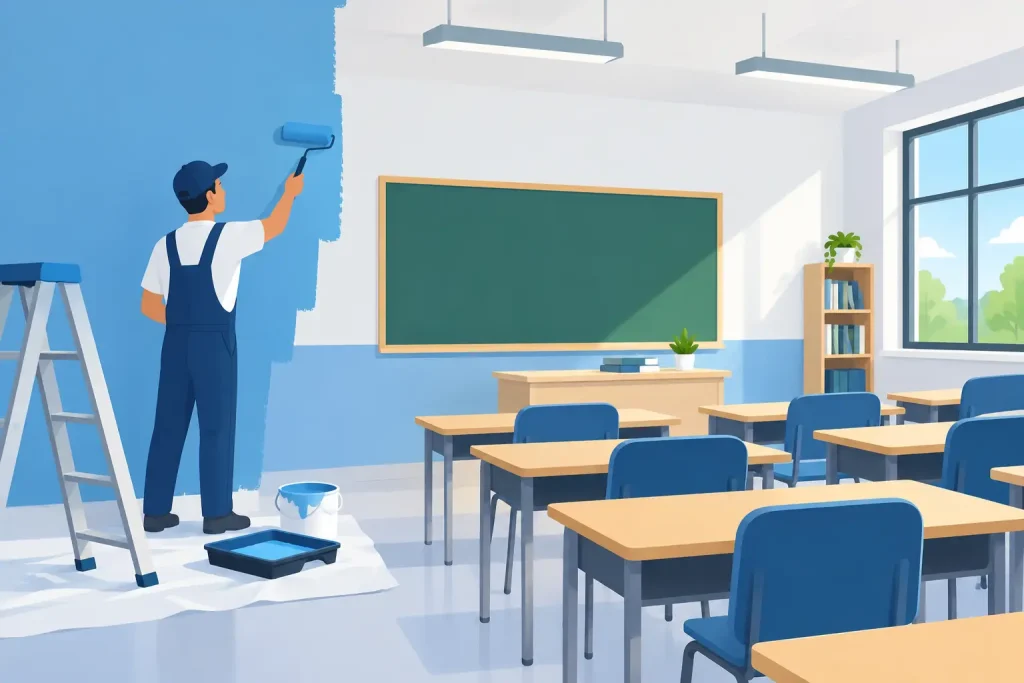
A school painting example is only useful if it shows more than fresh walls. For a Melbourne school, the real measure of success is whether the work improves tired buildings, protects high-use surfaces and is completed without interrupting learning, access or site safety. A quality result comes from careful planning before the first drop sheet is laid.
This example follows the type of repainting project commonly required at established primary and secondary schools: worn classroom walls, scuffed corridors, faded external timberwork and amenities that need a clean, durable finish. The scope will vary from site to site, but the principles remain the same.
The school painting example: a practical project brief
Consider a school with a two-storey classroom block, administration area, covered walkways and several portable buildings. Years of bags, chairs, wet-weather traffic and regular cleaning have left internal walls marked and patchy. Outside, painted fascias and window frames are weathered, while railings show early signs of paint breakdown.
The school needs the work completed over a term break, with a limited amount of external preparation possible during the preceding weekends. The facilities manager has three non-negotiables: safe access, a reliable completion date and no paint odour or unfinished areas when staff return.
That brief immediately changes how the job should be managed. Painting cannot be treated as a simple room-by-room exercise. The contractor needs to assess surfaces, sequence the works, confirm access requirements and select coatings that suit the building’s use.
Start with the condition of the building
A proper inspection identifies what sits beneath the old coating. Some walls may only need washing, spot filling and repainting. Others may have damaged plasterboard, moisture staining, peeling paint or cracks that must be repaired before new paint is applied. Painting over failed surfaces may look acceptable for a short time, but it will not deliver value for the school’s maintenance budget.
External surfaces require the same discipline. Timber trim may need scraping, sanding, priming and replacement of deteriorated sections. Steel handrails can require rust treatment and an appropriate primer before a durable topcoat is applied. Masonry may need crack repairs or sealing where moisture is affecting the finish.
For older school buildings, the inspection should also consider potentially hazardous materials. Where lead-based coatings or other regulated materials may be present, the work must be assessed and managed correctly before preparation begins. This is not an area for assumptions or shortcuts.
Specify coatings for heavy use, not just appearance
Classrooms and corridors need coatings that stand up to regular wiping and everyday impact. A washable low-sheen acrylic is often a practical choice for internal walls because it provides a softer appearance than gloss while remaining easier to maintain. Doors, skirtings and frames generally need a tougher finish that handles knocks and cleaning.
Low-odour, low-VOC products can be a sensible option where rooms need to be handed back quickly. However, the right product depends on the substrate, ventilation, cleaning regime and required drying time. The lowest-priced paint is not always the lowest whole-of-life cost if it marks easily or requires early repainting.
Colour selection should also serve the site. Neutral classroom colours can help rooms feel clean and bright, while carefully chosen feature colours can assist with wayfinding in corridors, year-level zones or administration spaces. Very dark finishes may show scuffs sooner, and brilliant white can be demanding in high-contact areas. A good colour schedule balances presentation with practical maintenance.
Plan the work around the school calendar
The difference between a smooth school project and a difficult one is often the programme. School holidays are ideal for occupied areas, but they are short and can be affected by weather, delayed repairs or restricted access. The scope should therefore be broken into clear stages before work starts.
In this example, external preparation begins on approved weekend dates. During the break, painters complete classrooms first, then corridors and amenities, followed by administration spaces. External topcoats are programmed around suitable weather windows. This sequence gives the project manager time to resolve an unexpected repair without holding up the entire handover.
A well-prepared programme should allow for surface preparation, drying time between coats, curing, access equipment, rubbish removal and final touch-ups. It should also identify spaces that need to remain available, such as a caretaker’s store, server room or holiday programme area.
Keep access and safety under control
Schools are active sites even during holidays. Maintenance staff, cleaners, contractors and occasional student programmes may still be present. Work areas need clear separation, signage and daily housekeeping. Materials should be stored securely, walkways kept clear and any wet paint or overhead work properly controlled.
For elevated external work, the contractor must have suitable access equipment and trained operators. Depending on the task, this may involve mobile scaffolding, boom lifts or elevated working platforms. Commercial site requirements, including White Cards, insurance and documented safety processes, provide school leaders with confidence that the job is being run professionally.
Ventilation is equally important indoors. Rooms should be aired appropriately, and painting schedules should account for product drying and curing requirements. The aim is not simply to finish by the last day of the break. It is to return spaces that are clean, safe, dry and ready for teachers to set up.
Preparation is where the finish is won
A polished topcoat cannot hide poor preparation. In this school painting example, painters begin by protecting floors, furniture, noticeboards and fixed equipment. Where practical, furniture is moved and grouped in the centre of the room; where it cannot be moved, it is carefully covered.
Walls are washed to remove grime and hand marks, loose paint is removed, holes are filled, and repairs are sanded smooth. Cracks around frames and skirtings are assessed rather than simply painted over. Gaps that require flexible sealant are treated before coating so the final lines look neat and remain more resilient.
This preparation takes time, particularly in older buildings. It is also the stage most likely to be reduced by an inexperienced operator trying to meet an unrealistically low quote. Schools should compare painting proposals on scope and process, not price alone. A quote that does not allow for repairs, primer, protection or adequate coats can become an expensive compromise.
Quality control before handover
As each area is completed, the work should be checked in good light from normal viewing positions. The inspection looks for missed sections, uneven coverage, roller marks, paint on fittings, rough repairs and untidy cut-in lines. Doors and windows should operate freely, while floors, furniture and external paths should be left clean.
A practical handover also includes recording the final colour schedule and product details. This helps the school manage future touch-ups and plan staged maintenance without guessing which paint was used. Where possible, a small labelled amount of touch-up paint can be retained in accordance with the school’s storage procedures.
The final walkthrough should be completed with the school’s nominated representative. This gives the client an opportunity to identify minor items while the team and equipment are still on site, rather than discovering them after classrooms are occupied again.
What this example shows schools should expect
A dependable painting contractor brings more than brushes and rollers. They provide a clear scope, qualified tradespeople, appropriate insurance, safe access capability and a programme built around the school’s operations. They communicate early if repairs or weather affect the plan and keep the site orderly throughout the work.
At The Scotsman Painters, that approach is backed by more than 30 years of Melbourne painting experience across commercial and education environments. The focus is straightforward: durable finishes, disciplined site management and work completed with minimal disruption to the people using the building.
A well-painted school does more than look cared for. It gives staff and students a cleaner, more welcoming environment, while protecting the surfaces that work hard every day. The right planning makes that improvement possible without turning a school break into another management problem.