
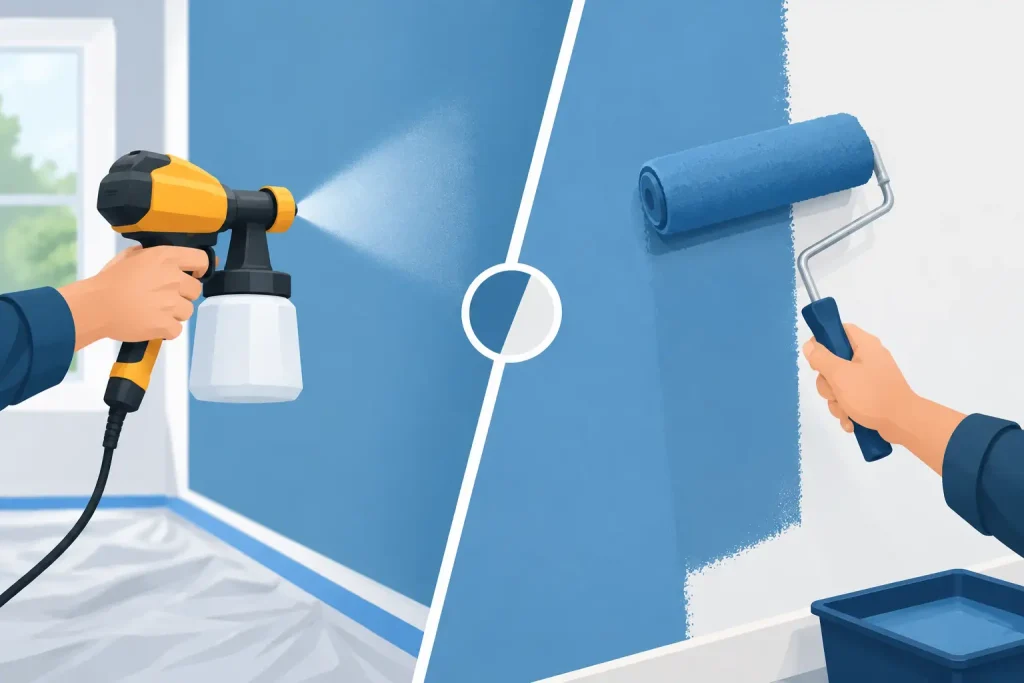
A freshly painted wall can look excellent with either method, but spray painting vs roller painting is not a simple choice between fast and slow. The right approach depends on the surface, access, site conditions, finish required and how much preparation is needed to protect the surrounding property.
For a vacant warehouse, a spray system can cover large areas efficiently. For an occupied office, a roller may be the more practical choice because it creates less overspray risk and allows work to be contained. On a detailed heritage façade, the best result may involve both methods, used by experienced painters at different stages of the job.
Spray Painting vs Roller Painting at a Glance
Spray painting applies paint as a fine, even mist using specialised equipment. It is particularly effective on broad, open surfaces and items with profiles that are difficult to reach with a brush or roller. Doors, ceilings, corrugated metal, warehouse interiors, fences and new plasterboard are common examples.
Roller painting applies paint directly to the surface with a roller sleeve. It gives painters close control over application, works well in occupied buildings and is a reliable method for walls, ceilings and smaller sections where careful cutting-in is required.
Neither method automatically delivers a better paint job. Surface preparation, correct product selection, film thickness, drying conditions and workmanship determine whether the coating performs well over time. A poor spray job can leave thin coverage or overspray. A rushed roller job can leave lap marks, stipple or uneven sheen.
When Spray Painting Is the Better Choice
Spraying earns its place when the project has enough clear space to justify the detailed masking and set-up. Once the area is prepared correctly, it can apply paint quickly and consistently across expansive surfaces.
Large and open areas
Commercial ceilings, factory walls, apartment car parks and empty interiors can often be completed more efficiently by spray. The painter can maintain a consistent application pattern without repeatedly loading and rolling a sleeve. This can help keep a larger project on programme, particularly where access equipment is already required.
Spray application also suits exterior cladding, metal roofs, fences and rendered walls where the surface is open and nearby windows, paving and landscaping can be thoroughly protected. On industrial work, it can be an effective way to coat steelwork, shutters and other substantial assets with the correct specified coating system.
Fine, uniform finishes
Spray can produce a smooth, even finish on internal doors, cabinetry, trim and selected feature surfaces. It is often the preferred method where a refined finish is expected and the substrate has been properly sanded, primed and cleaned.
That said, spray painting does not hide defects. In fact, an even spray finish can make dents, poor repairs and rough sanding more noticeable. Careful patching and preparation are essential before the first coat goes on.
Complex profiles and hard-to-reach surfaces
Louvres, balustrades, lattice, corrugated sheeting and textured surfaces can be time-consuming to coat by roller alone. Spray reaches into recesses and around profiles more readily, helping achieve full coverage where a roller cannot make consistent contact.
Where Roller Painting Has the Advantage
Roller painting remains one of the most dependable methods in residential and commercial repainting. It is controlled, adaptable and well suited to properties where people, furniture or daily operations remain on site.
Occupied homes and workplaces
Spray equipment atomises paint, so masking needs to be meticulous. Even a light breeze or an unsealed gap can carry overspray onto glass, cars, floors, stock or neighbouring property. For this reason, roller application is often the safer choice for furnished homes, active schools, offices and strata common areas.
A roller enables painters to work in manageable sections with less containment. Furniture still needs protecting, of course, but the preparation is generally more targeted. This can reduce disruption when rooms need to remain accessible during the project.
Controlled application on repairs and touch-ups
Rollers are particularly useful for repaired plaster, localised repainting and walls that need attention without repainting the entire room. The painter can blend and build coverage carefully, while keeping paint within defined edges.
The roller sleeve also helps work paint into lightly textured walls. Matching the existing roller nap is important when repainting part of a wall, as a different texture can stand out under changing light.
Smaller areas and detailed layouts
A compact room full of joinery, a stairwell, or a wall interrupted by services and fittings may take longer to mask for spray than to paint by roller. The practical answer is not always the fastest application method. It is the method that delivers a clean result with sensible labour, protection and clean-up requirements.
Preparation Is the Real Difference
The visible painting stage is only part of the work. Spray painting requires a higher level of containment: floors, windows, fixtures, electrical fittings, landscaping and adjacent finishes must be masked or covered thoroughly. Ventilation and weather also need close attention, especially on exterior projects.
Roller painting still requires proper preparation. Surfaces must be washed, scraped, filled, sanded and primed where required. Cracked render, flaking coatings, water damage and failed sealants should be addressed before painting begins. Applying a premium topcoat over an unstable surface is a short-term fix, not a professional solution.
For both methods, painters should check the coating manufacturer’s requirements for temperature, moisture, recoat times and substrate suitability. Melbourne weather can change quickly, and exterior painting schedules need to allow for wind, rain, cold conditions and curing time.
Cost, Speed and Site Disruption
Spray painting can reduce application time on a large, clear job, but it is not automatically cheaper. The masking, equipment set-up, cleaning and containment can be substantial. Where access is limited or the building is occupied, those requirements can outweigh the speed gained during spraying.
Roller painting is usually slower across broad, unobstructed areas, yet it can be more cost-effective for smaller rooms and detailed spaces. It typically involves less extensive masking and is easier to stage around residents, staff or tenants.
For commercial and strata work, the bigger cost is often disruption. A method that allows a business, school or apartment complex to keep operating safely may be better value than a faster method that requires extensive shutdowns. Good planning includes work sequencing, access arrangements, protection of common areas and clear communication with occupants.
The Best Finish Often Uses Both Methods
Experienced painters regularly combine spray and roller techniques. A ceiling may be sprayed for even coverage, then back-rolled to work the paint into the surface and create a consistent texture. Exterior cladding may be sprayed while trims and tight sections are brushed or rolled. Doors can be sprayed off-site or in a controlled area, while surrounding walls are rolled.
Back-rolling deserves particular mention. This process involves spraying paint onto a surface and immediately rolling it while wet. It can improve adhesion and coverage on porous or textured surfaces while retaining much of the speed benefit of spraying. It is not necessary for every coating system, but it can be the right specification for new plasterboard, render and certain exterior substrates.
Choosing the Right Method for Your Property
The decision should start with an inspection, not a preference for a particular tool. Consider the condition of the existing paint, the size and shape of the area, neighbouring surfaces, access, occupancy and the level of finish expected. A heritage property may need careful hand work around original details, while a vacant commercial tenancy may be ideal for efficient spray application.
Safety and compliance matter as well. Elevated work, commercial sites and industrial environments require the right equipment, trained tradesmen and a clear plan for protecting people and property. A professional painting contractor should explain how the area will be prepared, which application method is proposed, and how overspray, dust and daily access will be managed.
The Scotsman Painters assesses each project on its practical requirements, rather than forcing every job into one method. With more than 30 years of Melbourne painting experience, the focus is on selecting the approach that protects the site and delivers a durable, polished finish.
A well-planned paint job should leave you with more than a fresh colour. It should give your home, workplace or managed property a finish that looks right from every angle and continues to perform long after the painters have packed up.