
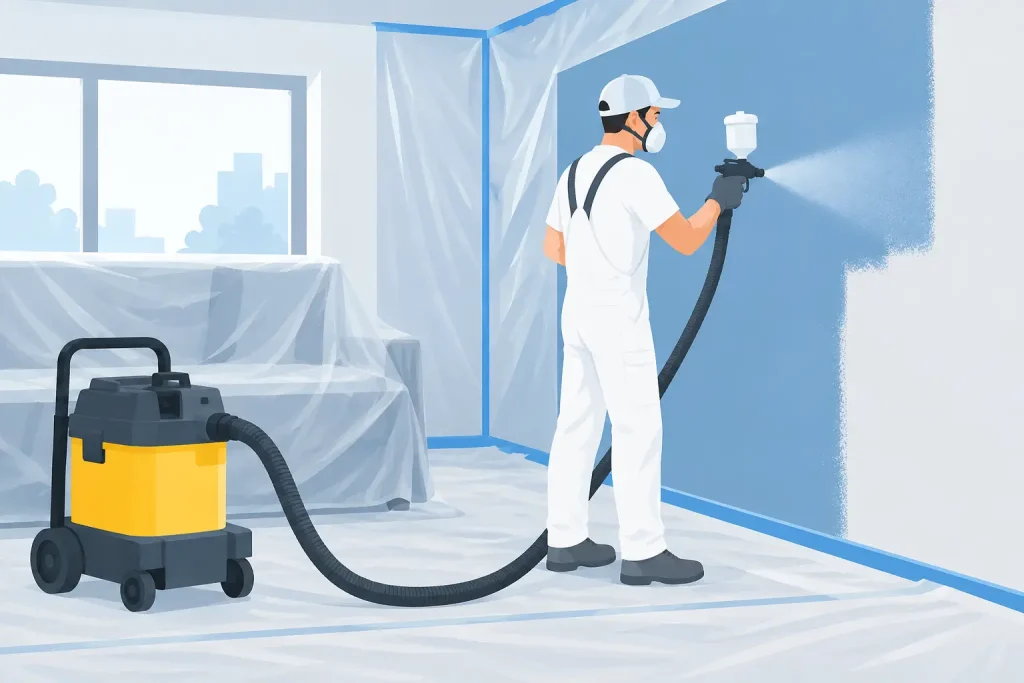
A quality paint finish starts well before the first coat goes on. Knowing how to control painting dust protects occupants, keeps adjoining areas clean and prevents airborne particles settling into fresh paint. For Melbourne homes, offices, schools and strata properties, it is also a practical way to reduce disruption while surface preparation is underway.
Painting dust is usually created when old coatings, plaster, timber, render or metal surfaces are scraped, sanded, ground or repaired. The risk varies by building age, the condition of the surface and the preparation method. A small bedroom repaint requires different controls from a large occupied office or heritage property, but the principle is the same: contain dust at its source, stop it travelling and remove it properly.
Why painting dust needs proper control
Dust does more than create a cleaning job. Fine particles can move through open doorways, air-conditioning returns and gaps around skirting boards, affecting rooms well beyond the work area. On a commercial site, that can interrupt staff and contaminate equipment. In a home, it can settle on furniture, flooring and personal belongings.
It can also compromise workmanship. Dust left on a wall, ceiling or timber surface affects paint adhesion and can leave a rough finish, even when premium coatings are used. Careful preparation and cleaning are therefore part of achieving the smooth, durable result clients expect.
Older properties require additional caution. Paint applied before the 1970s may contain lead, particularly on doors, windows, weatherboards and other previously painted surfaces. If lead paint is suspected, do not treat it as an ordinary sanding job. The work should be assessed and managed using suitable controls by trained professionals.
How to control painting dust before work begins
The best dust control is planned before tools come out. Start by inspecting the surfaces and identifying the likely amount of preparation required. Flaking paint, extensive patching, damaged plaster and rough timber all indicate a higher dust load than a sound wall needing a light scuff sand.
The work zone should then be cleared as far as possible. Furniture, computers, stock and loose items are best removed from the room. Where removal is not practical, cover them fully with clean plastic sheeting or protective drop sheets and seal the edges where appropriate. Fabric covers can be useful for floors and furnishings, but they are not a substitute for sealed containment when fine dust is expected.
Close internal doors and use plastic barriers across doorways to separate the work area from occupied spaces. In larger buildings, it may be necessary to create a contained access point so tradespeople can enter and leave without carrying dust through common areas. For strata buildings, schools and offices, planning the route for workers, equipment and rubbish is as important as protecting the room itself.
Heating, cooling and ventilation systems deserve particular attention. If an air-conditioning return or supply grille sits within the work zone, it should be protected where safe and practical. Running a system during dusty preparation can draw particles into ducts and distribute them elsewhere. The right approach depends on the building and ventilation requirements, so it should be considered as part of the site plan rather than handled as an afterthought.
Use low-dust preparation methods
Dry sanding with an uncovered orbital sander is fast, but it creates a large volume of airborne dust. Professional preparation should favour methods that reduce particles at the point they are generated.
Sanding equipment connected to a suitable dust extractor is one of the most effective controls. The extractor should be maintained, fitted with appropriate filtration and used correctly throughout the sanding process. A vacuum attachment only works when it remains connected and the sanding discs, hoses and filters are in sound condition.
Wet sanding can reduce airborne dust on suitable surfaces, particularly for smaller hand-sanding tasks. It is not appropriate for every substrate or repair, and excess moisture can damage some materials or delay painting. The surface must also be allowed to dry properly before coating begins.
Scraping should be done carefully, with a drop sheet positioned directly below the work. Rather than aggressively sanding every surface, experienced painters choose the least invasive preparation method that will deliver a stable, paint-ready substrate. This may mean spot filling and feathering a repair instead of sanding an entire wall, or removing loose paint selectively before priming.
For high-level work, dust control becomes even more important. Ladders, scaffolds and elevated work platforms can place preparation above pedestrian areas, vehicles or neighbouring properties. The area below needs to be isolated, and the work should be scheduled to minimise exposure to residents, staff and the public.
Contain dust inside the work zone
Containment is what stops a manageable preparation task becoming a whole-building clean-up. Plastic sheeting should overlap at joins and be secured so it does not lift as people move around the site. Floor protection needs to extend beyond the immediate sanding area because dust can travel farther than expected.
For occupied commercial spaces, temporary walls or zip-entry barriers may be warranted. These allow normal activity to continue outside the work area while maintaining a controlled boundary. The level of containment depends on the work scope, but it should always suit the building’s use. A vacant retail tenancy can be managed differently from a medical practice, classroom or office operating through the day.
Doors and windows can be used to manage airflow, but simply opening everything is not always the answer. An open window may help disperse minor dust in a private room, yet it can also send particles onto neighbouring balconies, gardens or footpaths. External conditions, site location and the nature of the dust all matter.
Painters should avoid sweeping dry dust across floors. Sweeping sends fine particles back into the air and can push them beyond barriers. The same applies to using compressed air for cleaning surfaces, clothing or tools. It is quick, but it spreads the problem instead of solving it.
Clean as the work progresses
Dust control is not a one-off task completed at the end of the day. Regular cleaning prevents build-up and keeps the site safer and more presentable. Vacuum prepared surfaces, floors, ledges and containment edges with a suitable vacuum, then wipe down surfaces using a damp cloth where the substrate allows.
A standard household vacuum may not capture fine dust effectively and can release particles back into the room. For preparation work, a professional-grade unit with appropriate filtration is the safer choice. Filters need to be checked and replaced according to the manufacturer’s instructions, otherwise extraction performance drops when it is needed most.
Before priming or painting, walls and trim should be free of sanding residue. This is especially important for gloss finishes, dark colours and areas receiving strong natural light, where even minor surface debris becomes visible. A clean substrate helps the coating flow and bond as intended.
At the end of each shift, bag sanding waste and paint scrapings rather than leaving them in open piles. Remove rubbish through the planned route, inspect the surrounding area and keep walkways clear. On shared sites, this daily discipline reassures residents, staff and property managers that the project is being managed professionally.
Protect people, not just the finish
Containment and extraction are the first line of defence, but personal protective equipment remains necessary. Painters undertaking dusty preparation should use suitable respiratory protection, eye protection and work clothing for the task. For fine dust, a properly fitted P2 respirator is commonly used, although higher-risk materials or conditions may require different controls.
PPE is not a replacement for good site practices. A mask does little to protect a client, employee or family member in the next room if dust is allowed to escape the work zone. The strongest approach combines careful preparation, extraction, containment, cleaning and clear communication with everyone on site.
Clients can help by keeping children, pets and unauthorised people out of the contained area, and by discussing access requirements before work begins. For businesses and body corporates, notifying occupants of work times and affected areas makes the job easier to manage without unnecessary interruption.
When professional dust management is worth it
A minor touch-up may only need careful hand preparation and a thorough clean. Larger projects, extensive sanding, occupied buildings, elevated areas and older coatings call for a more controlled approach. The cost of proper protection is generally far less than the cost of cleaning an entire property, repairing a compromised finish or dealing with an avoidable complaint.
At The Scotsman Painters, dust management is treated as part of quality workmanship, not an optional extra. Qualified tradesmen plan preparation around the property, the people using it and the finish required, so the work can proceed with care and minimal disruption.
If painting preparation will create more dust than you can comfortably contain, stop before sanding starts and set up the right controls. A clean, well-managed work area gives the paint job the best possible foundation and gives everyone on site greater confidence in the result.