
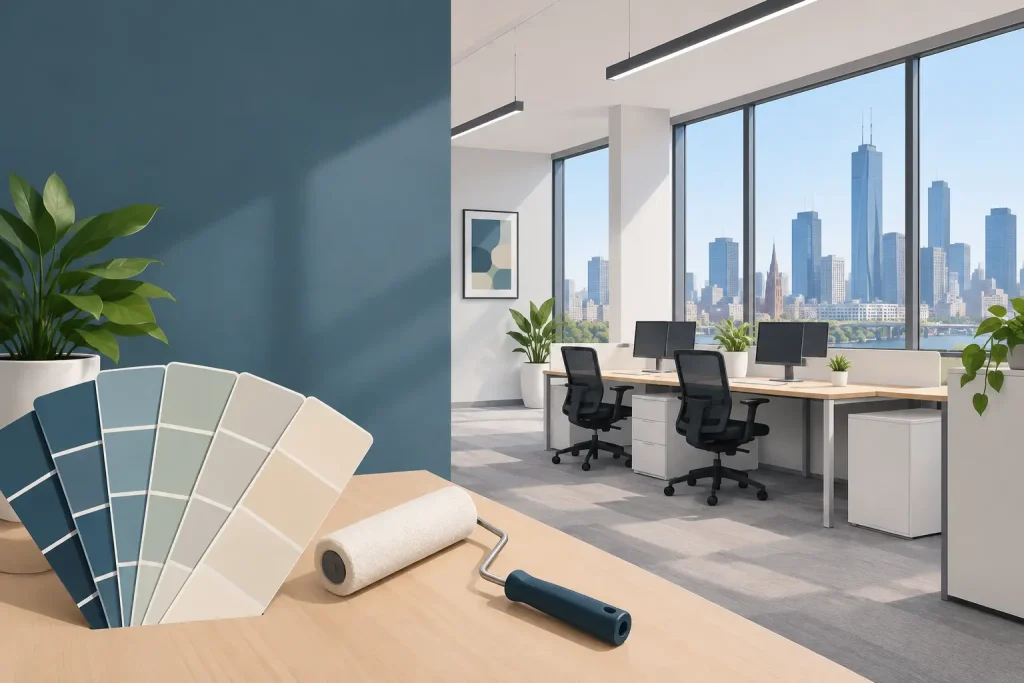
A busy office wall tells the truth quickly. Chair backs leave scuffs, fingers mark door frames, bags knock reception corners and cleaning can dull a poorly chosen coating within months. The best paint finishes for offices are not simply the ones that look good on handover day. They need to suit how each area is used, stand up to regular cleaning and support a professional workplace for the long term.
For Melbourne office managers, tenants and commercial property owners, choosing the right sheen can reduce maintenance work, extend repainting cycles and help a premises stay presentable between lease inspections or fit-outs. The right choice is usually a considered combination of finishes rather than one finish used everywhere.
Best paint finishes for offices by area
Paint sheen affects appearance, durability and how easily a surface can be cleaned. Higher-sheen paints generally resist moisture and marks better, but they reflect more light and can expose dents, patching and uneven plasterwork. Lower-sheen finishes soften light and hide minor surface imperfections, although they can be less forgiving in high-contact areas.
Low sheen for most office walls
Low sheen acrylic is often the most practical starting point for general office walls. It provides a clean, modern look with a subtle finish that does not create distracting glare from windows, screens or overhead lighting. It is also more washable than a flat or matte coating, making it suitable for open-plan workspaces, meeting rooms, corridors and reception walls.
This finish offers a sound balance between appearance and maintenance. It helps conceal minor plaster variations in older buildings while still allowing routine spot cleaning. For many commercial interiors, a quality low sheen system is the sensible all-round choice.
There is a trade-off. Very low-cost low sheen paint may burnish or become shiny where it is repeatedly scrubbed. In busy offices, choose a commercial-grade washable product and ensure it is applied over properly prepared surfaces. Product quality and preparation matter as much as the sheen level printed on the tin.
Matte finishes for ceilings and low-contact feature walls
Matte or flat paint is best suited to ceilings and selected feature walls where physical contact is limited. Its low reflectivity hides surface irregularities exceptionally well, which is useful across broad ceiling areas or on walls with less-than-perfect substrate conditions.
For a boardroom feature wall or executive office, matte can create a refined finish and give deeper colours a more solid appearance. It is not usually the first choice for main traffic routes, lunchrooms or areas where people regularly lean, brush past or move furniture. Marks on matte surfaces can be difficult to clean without leaving a visible patch.
Ceilings are a different matter. A quality flat ceiling paint helps minimise glare and disguises minor joins or repairs, delivering a neat, even result above the working environment.
Satin or semi-gloss for doors, frames and joinery
Doors, architraves, skirting boards and window frames take more punishment than walls. They are touched constantly, knocked by trolleys and chairs, and subject to hand marks around handles. Satin and semi-gloss finishes are well suited to these surfaces because they are harder wearing and easier to wipe down.
Satin provides a softer lustre and can suit contemporary offices where a restrained look is preferred. Semi-gloss has more shine and offers strong resistance to scuffs and repeated cleaning, making it a dependable option for high-use doors, metal frames and timber trim.
A higher sheen will reveal poor surface preparation, so sanding, filling and priming need to be done carefully. If doors have old chips, dents or peeling coatings, painting over them without repair will only make the defects more obvious.
Semi-gloss for wet and high-cleaning zones
Kitchenettes, bathrooms, cleaner’s cupboards and utility areas benefit from a durable, washable coating. Semi-gloss is commonly specified here because it handles moisture, splashes and regular cleaning better than lower-sheen finishes.
The room’s ventilation and substrate condition still need attention. Paint is not a cure for ongoing moisture problems, mould or water ingress. Those issues should be resolved before repainting, otherwise even a quality coating can fail prematurely.
Match the finish to office traffic, not just colour
A consistent colour palette can make an office feel organised, but using one finish across every surface is rarely the best value decision. Assess how each room operates. A quiet enclosed office has different demands from a shared hallway or client-facing reception.
Reception spaces need to look polished while tolerating bags, umbrellas and frequent visitor contact. Low sheen walls with satin or semi-gloss trim are usually a practical combination. In corridors and stairwells, the same approach works well, though semi-gloss may be warranted on lower wall sections in particularly hard-wearing environments.
Meeting rooms benefit from lower-reflective wall finishes, particularly where presentations and video calls are common. Excessive sheen can create glare under downlights or show reflections on camera. Low sheen walls and a flat ceiling create a calmer visual setting without compromising cleanability.
For warehouses with attached offices, schools, medical suites or commercial strata common areas, the paint specification may also need to account for greater wear, cleaning regimes and safety requirements. A qualified commercial painter can recommend a coating system based on the specific substrate and operating conditions, rather than applying a residential approach to a commercial site.
Consider light, surface condition and colour
Finish selection changes how colour behaves. Dark colours absorb light and can show rubbing, dust and fingerprints more readily, particularly in a matte finish. Light colours reflect more light, helping compact rooms feel open, but can reveal scuffs in busy passageways.
Natural light also matters. A wall beside large windows may show flaws that are invisible elsewhere, while glossy surfaces can produce uncomfortable reflections in bright spaces. Before committing to a full repaint, test colour and finish samples on the actual wall. Check them in morning light, artificial light and after-hours conditions.
Surface condition is equally important. Higher-sheen paint highlights every defect, including uneven plaster repairs, roller marks and old patching. Where walls have extensive imperfections, thorough preparation may be needed before a more washable finish can look its best. This can include filling, sanding, sealing stains and applying an appropriate primer.
Durability starts with preparation
A paint finish can only perform as well as the surface beneath it. In occupied offices, walls often carry hidden contamination from hand oils, adhesive residue, old signage, dust and cleaning products. These can affect adhesion if not removed before painting.
A proper commercial repainting process begins with protecting workstations, floors and fixed fittings, then cleaning and preparing the surfaces. Loose or failing paint must be removed, cracks repaired and affected areas primed. The selected topcoat should be compatible with the existing coating and the substrate, whether it is plasterboard, masonry, timber, steel or previously painted joinery.
This work is not glamorous, but it is where finish quality and longevity are won. A good result should look consistent under office lighting, feel smooth to the touch and withstand normal cleaning without early peeling or excessive marking.
Choose low-odour products and plan the works
Workplace disruption is often the deciding factor in an office repaint. Low-VOC, low-odour water-based paints can help improve the experience for staff and allow spaces to return to use sooner, but they should still be selected for performance as well as reduced odour.
Scheduling also makes a material difference. Painting can often be staged after hours, over weekends or zone by zone to keep a business operating. Clear access arrangements, site protection, safe work practices and an agreed programme are essential, particularly in shared buildings and occupied tenancies.
The Scotsman Painters plans commercial painting work around the practical needs of Melbourne workplaces, with qualified and insured tradesmen focused on careful preparation, reliable scheduling and a finish built for daily use.
The most effective office paint specification is rarely the shiniest or the cheapest option. Choose low sheen where people work, flat paint where glare and ceiling imperfections need controlling, and tougher satin or semi-gloss coatings where hands, furniture and cleaning take their toll. When each finish is matched to the space, the office keeps looking professional long after the painters have packed up.