
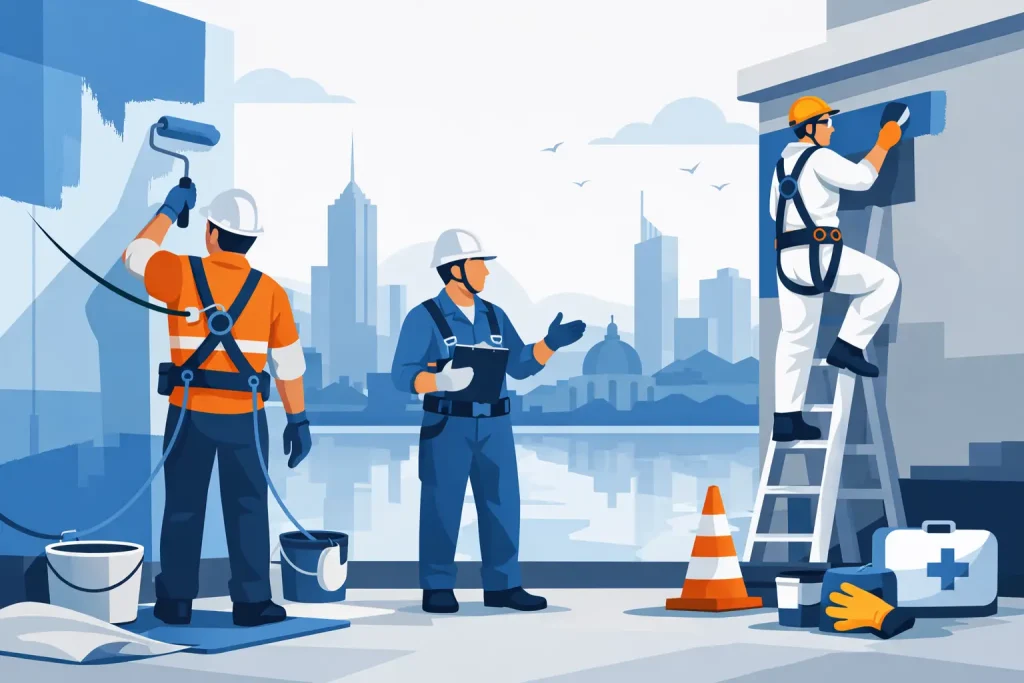
A fresh paint finish should improve your property, not introduce avoidable risk to residents, staff, visitors or the tradespeople doing the work. Painting contractor safety compliance is therefore more than a box to tick before work begins. It is the practical planning, supervision and site control that allows a project to move ahead safely, neatly and on schedule.
For homeowners, facilities managers and body corporate committees, safety also protects the outcome. A contractor who manages access, dust, fumes, elevated work and occupied areas properly is far less likely to cause disruption, property damage or costly delays.
What painting contractor safety compliance looks like
A compliant painting site is not necessarily noisy or complicated. In many cases, it simply looks organised. The work area is clearly separated, materials are stored correctly, access routes remain clear, and the team knows what work is happening around them.
Before starting, a professional contractor should assess the property, identify hazards and decide how the job will be completed safely. The right approach depends on the building, the condition of the surfaces, who occupies the site, the height of the work and the coatings being used. Painting a vacant single-storey home is very different from repainting an occupied office, school, heritage façade or multi-storey apartment complex.
In Victoria, painting work must be carried out in line with applicable occupational health and safety duties. For clients, the key question is not whether a contractor can produce paperwork on request. It is whether their safety systems are specific to your site and followed by the people completing the work.
Site-specific planning before work begins
A proper site inspection helps prevent the usual problems before they occur. This includes checking surface condition, access points, height requirements, electrical hazards, pedestrian movement, vehicle areas and the presence of occupants.
Where high-risk construction work is involved, a safe work method statement may be required. This is particularly relevant where there is a risk of falling, work near live electrical services, traffic interaction, structural alteration or hazardous materials. It should describe the actual work being performed and the controls in place, rather than being a generic document pulled out for every job.
On commercial, industrial and strata sites, planning should also cover practical matters such as working hours, delivery locations, loading zones, fire exits, building rules and emergency contacts. These details may seem minor, but they are often the difference between a well-run project and one that inconveniences everyone on site.
Working safely at height
Exterior painting often involves heights, which is why access equipment deserves close attention. Ladders may suit brief, light-duty tasks, but they are not the answer for every elevated surface. Repeated work from a ladder can increase the risk of falls, overreaching and inconsistent preparation or finish quality.
Depending on the job, a contractor may use scaffolding, elevated working platforms, boom lifts or other suitable access systems. The best option depends on ground conditions, required working height, site access, overhead services and the duration of the task. A narrow side passage, for example, may require a different solution from an open commercial car park.
Safe elevated work requires more than hiring equipment. Operators need appropriate training and the equipment must be used, inspected and positioned correctly. Ground conditions, exclusion zones and nearby footpaths or driveways all need to be considered. For multi-storey properties, the contractor should also control the risk of dropped tools, paint and preparation debris affecting people below.
Clients should be wary of shortcuts. If an exterior project clearly requires safe height access but the quote allows only for ladders and no site controls, it may not reflect the true scope of the work.
Controlling paint, dust and hazardous materials
Painting involves chemicals, sanding dust and surface contaminants. Responsible contractors manage these risks through correct product selection, ventilation, handling procedures and personal protective equipment.
Safety data sheets should be available for paints, solvents, cleaners and other products used on site. These documents outline hazards, first-aid information, storage requirements and safe handling guidance. Low-odour or low-VOC products can be useful in occupied homes and workplaces, but they do not remove the need for sensible ventilation and safe work practices.
Surface preparation can present an even greater concern, particularly in older buildings. Existing coatings may contain lead, while some older materials can involve asbestos-related risks. A painter should not guess when there is a reasonable concern about hazardous materials. The area may need to be assessed and managed before sanding, scraping, drilling or disturbing affected surfaces.
Dust control matters for both health and finish quality. Containment, appropriate sanding equipment, careful clean-up and protection of nearby furnishings help keep dust from travelling through a home, common area or workplace. On a commercial site, this also reduces the chance of dust reaching stock, equipment or sensitive operations.
Protecting occupants and the public
A painting project often takes place while a building remains in use. Residents still need access to their homes, staff need to get to work, students need to move safely through school grounds and customers may still be entering a business. That makes communication and separation of work areas essential.
Clear signage, barriers and controlled access help prevent people walking into wet paint, trip hazards, cordoned-off sections or elevated work zones. Where work affects shared spaces, the contractor should coordinate with the building manager or site representative so occupants receive practical notice about timing, access changes and any temporary restrictions.
For strata and body corporate properties, common areas need particular care. Hallways, stairwells, foyers, car parks and entry points cannot simply be blocked without a plan. A reliable contractor stages the work to preserve safe passage where possible and sets realistic expectations where a temporary closure is unavoidable.
Noise, fumes and dust should also be managed with the building’s daily operation in mind. It may be sensible to schedule certain preparation tasks outside peak hours, or complete sections progressively to keep disruption low. There is always a balance between speed and access, but the safest plan is usually the one that has been discussed early rather than improvised midway through the job.
Qualified people, suitable equipment and insurance
Safety compliance relies on capable people. Painting teams working on commercial sites should hold the relevant construction induction credentials, commonly known as White Cards. Where specialist plant or access equipment is required, the people using it must have the appropriate competency and authorisation.
Insurance is another practical protection for property owners. A professional contractor should carry suitable cover for the work they undertake and be prepared to provide evidence when requested. Insurance does not replace safe work practices, but it is an essential part of dealing responsibly with unforeseen events.
Equipment should be maintained and fit for purpose. That includes ladders, scaffolds, spray equipment, extension leads, electrical tools and personal protective equipment. A painter turning up with worn or unsuitable gear is not merely presenting poorly. They may be increasing risk to the site and putting the schedule at risk if equipment fails.
Questions worth asking before you appoint a painter
Price matters, but a low quote can become expensive if it overlooks safe access, containment or the extra labour required to work around occupants. When comparing proposals, ask how the contractor plans to manage height access, public safety, dust and fumes, site protection, and working around your normal operations.
It is also reasonable to ask whether the team is qualified for the environment, whether they can provide insurance details and whether they have experience in comparable properties. A contractor with a strong residential track record may still need different systems for a school, office tower, factory or managed apartment complex.
The Scotsman Painters brings more than 30 years of Melbourne painting experience to projects across residential, commercial, industrial, strata and heritage settings. Qualified, insured tradesmen and appropriate elevated working capability allow the team to plan work around the realities of each property, with care for the people using it.
Safety protects the finish as well as the people
Good safety practice and good painting workmanship are closely connected. Protected floors and furnishings stay cleaner. Controlled preparation produces a better surface for coating. Stable access equipment gives painters the working position needed for even coverage and detailed finishing. Clear staging prevents wet paint from being damaged by people moving through the area.
There can be trade-offs. More extensive containment or carefully timed access may add planning and, in some cases, cost. Yet those measures can reduce downtime, rework and complaints, especially on occupied or high-traffic sites. The right level of control should match the risk, not be treated as an optional extra.
When you choose a painting contractor, look beyond colour advice and the final quote. Ask how the work will be managed from the first day on site. A team that can explain its safety approach clearly is more likely to protect your property, respect your occupants and deliver the standard of finish you expect.